Inflatable vs Solid Canine Fitness Platforms
By Priya Nanda • 19th Mar
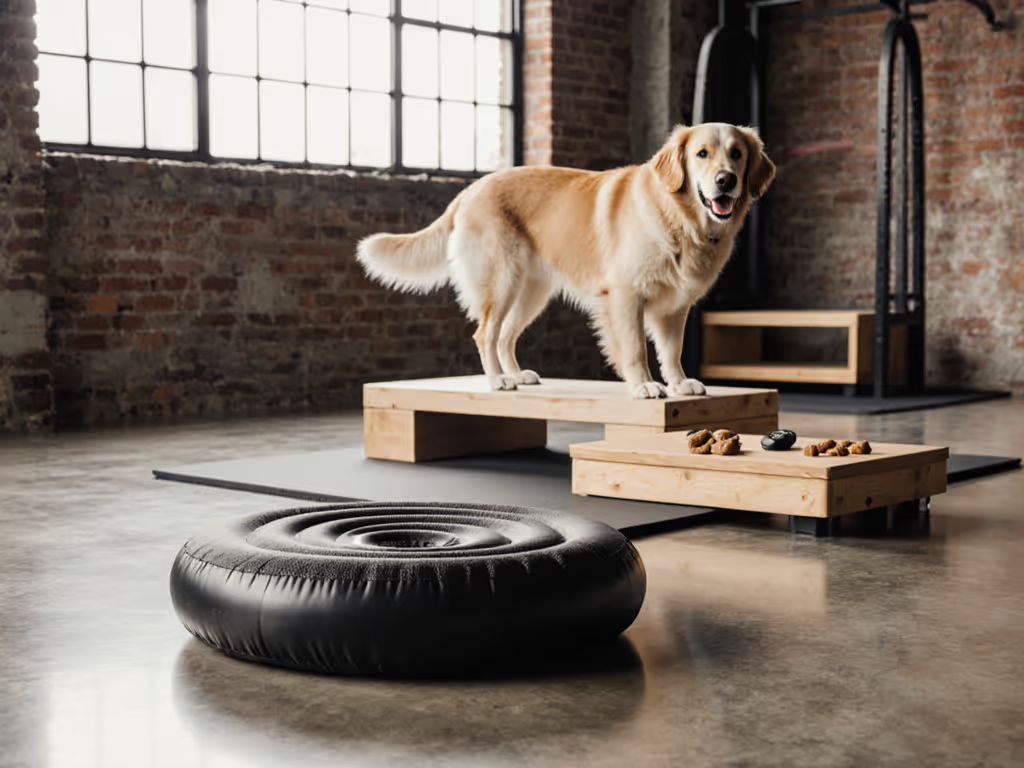
When choosing between inflatable vs solid platforms for your dog's conditioning work, you're really choosing between two fundamentally different training strategies, and that choice cascades into durability, maintenance cost, and long-term welfare outcomes. Both serve the dog's body, but neither works equally well in isolation, and understanding why matters far more than which brand logo appears on your receipt. For foundational principles and safe progressions, see our canine fitness basics.
I learned this the hard way. A snap failed mid-commute years ago (not on a harness, but on the snap ring of an inflatable platform I'd bought because the price tag was friendlier). That afternoon, I audited hardware types, warranty coverage, inflation durability, and cost-per-walk across a full year. Two modestly priced pieces with solid construction outperformed that single flashy set by every metric. That experience anchored a principle I apply to all fitness gear now: budget doesn't excuse bad welfare.
What These Platforms Actually Do
Before comparing durability and cost, it's essential to understand what each platform type accomplishes. Form drives function[1]. Without proper movement and alignment, even the most sophisticated equipment fails to deliver results.
Solid platforms (also called stable or fixed surfaces) communicate to your dog where feet should be placed and maintain proper muscle recruitment throughout the exercise[1]. They allow your dog to build foundational strength and power gains by engaging large muscle groups like glutes, quads, and shoulders without balance distraction[4]. Simple exercises like sit-to-stands on flat ground deliver measurable strength adaptations because the dog's nervous system focuses on load and range, not wobbling compensation.
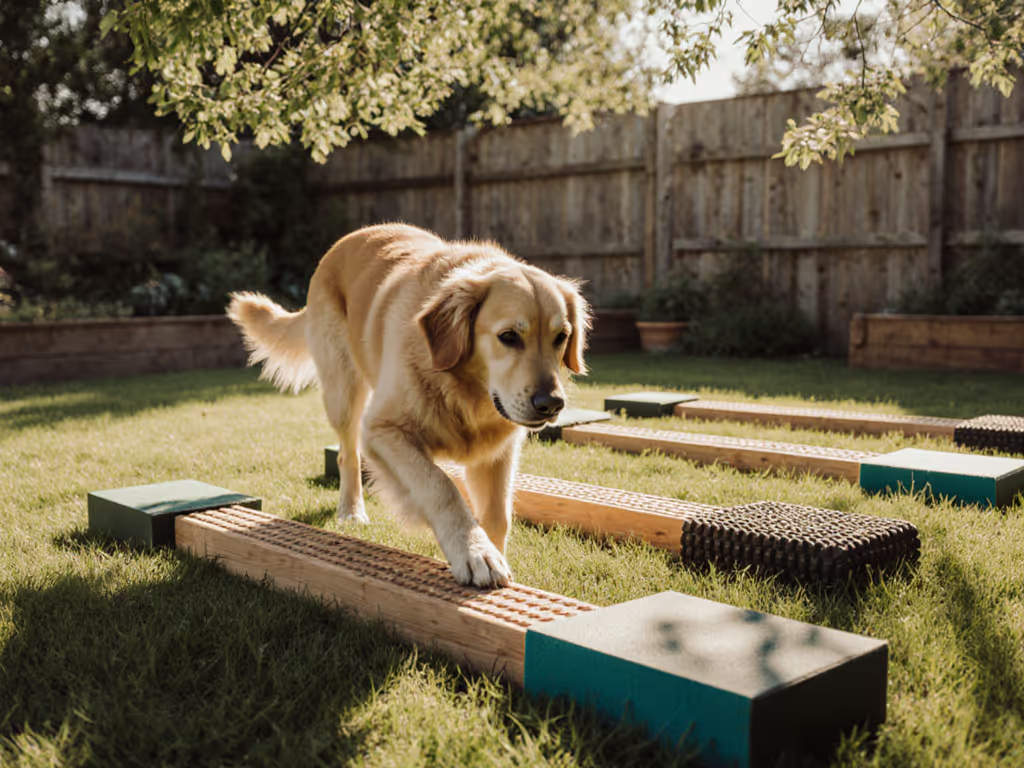
Inflatable platforms (balance discs, wobble boards, air platforms) introduce instability that challenges proprioception (your dog's awareness of body position in space)[6]. This teaches stabilization muscles and body awareness, but here's the trade-off: because the dog's attention is split between foot placement and balance, the larger muscle groups (rear and front legs) don't experience the same overload (increased demand) needed for true strength gains[4].
Neither is superior. Combined thoughtfully, they create a complete conditioning program[4].
Solid Platforms: Durability, Cost, and Real-World Performance
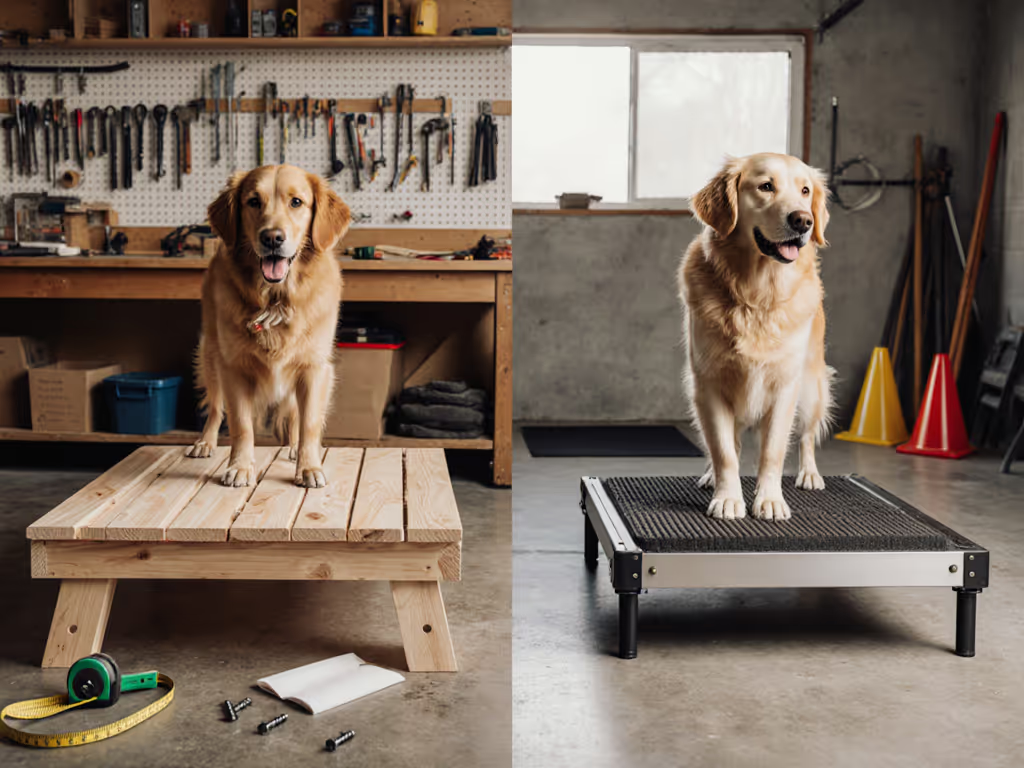
Solid platforms come in two primary forms: wood-based (DIY or manufactured) and rigid plastic/composite structures. A Cato Board or similar wooden platform with rubber top surface costs $150-$300 and, with basic care, survives 5-7 years of regular use[3].
Maintenance reality: Solid platforms are low-friction from a maintenance perspective. Rinse with a hose, let dry, store indoors or under cover. No inflation checks, no seal degradation, no UV vulnerability if you're using untreated materials. If the rubber top wears, you can often replace just that component without replacing the entire platform. Warranty coverage typically spans 2-3 years[3], and repair options are plentiful (a cracked board is repairable by any carpenter; a broken inflatable is rarely worth fixing).
Price-to-longevity: At $250 for a 6-year lifespan, that's roughly $42 per year or about $0.11 per daily session (assuming 365 uses). Add inflation drills or weight transfers, and the platform experiences 4-5 sessions per week; cost-per-use drops further.
Safety in variable terrain: Solid platforms don't shift under your dog's weight, which means zero slip risk on slopes, wet grass, or muddy surfaces. This matters hugely if you're training outdoors or in multi-surface environments.
Inflatable Platforms: Versatility, Complexity, and Hidden Maintenance
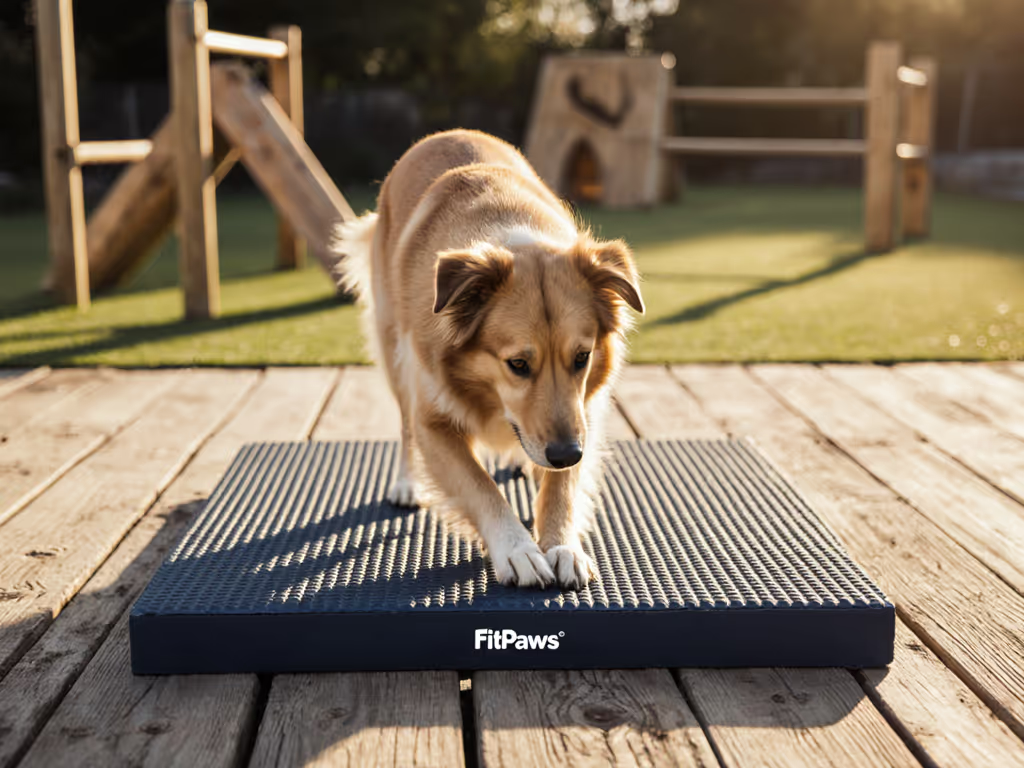
Inflatable platforms (Propel Air Platform, FitPaws K9FitBone, wedges, balance pads) range from $80-$250 depending on size and material quality. Not sure whether to start with pads or discs? See our balance pads vs discs.
Field durability: A platform tested extensively in demanding conditions (mud, rain, creek submersion, steep slopes) reveals the real difference between budget inflatables and engineered ones. The Propel Air Platform, tested through monsoon simulations and 48-hour creek submersion, maintained structural integrity where fabric-based balance pads absorbed moisture and warped[2]. FDA-compliant vinyl held traction even when coated in sludge, a critical safety detail[2].
However, inflation level is non-negotiable for safety. Full deflation (30% air) creates dangerously unstable conditions on slopes; under-inflated units sank 1.5 inches into soft earth, creating tripping hazards[2]. The platform is safe when properly inflated but becomes a liability when underutilized (a detail many owners miss or ignore to "save the equipment").
Maintenance burden: Inflatable platforms require monthly inflation checks, particularly if stored seasonally or used outdoors. UV stabilization matters if the platform sits outside; non-UV-stabilized inflatables deteriorate within 1-2 seasons of direct sun exposure[5]. The valve systems, seals, and material integrity degrade with time; a platform rated for dogs up to 300 pounds[5] will experience seal stress sooner if your dog is a consistent 90-pound jumper using it 5+ times weekly.
Hidden costs: A puncture or slow leak isn't always repairable, many owners simply replace the platform. Warranty coverage is typically 1-2 years, which means repairs after that point come from your pocket. Replacement patches and repair kits exist but require owner skill and commitment.
Price-to-longevity: At $180 for a 3-4 year realistic lifespan (assuming monthly inflation checks and seasonal storage), you're looking at $45-$60 per year. Add maintenance time and seasonal prep, and the true cost climbs. If a seal fails in year 3 and you replace the unit, you've now spent $360 across your training journey.
The Comparison: What the Data Actually Shows
| Factor | Solid Platforms | Inflatable Platforms |
|---|---|---|
| Initial Cost | $150-$300 | $80-$250 |
| Realistic Lifespan | 5-7 years | 3-4 years |
| Annual Cost | $35-$50 | $45-$65 |
| Maintenance Burden | Minimal (rinse, dry, store) | High (monthly checks, seasonal prep) |
| Repair Viability | Yes (component replacement common) | No (often requires full replacement) |
| Outdoor Safety | Excellent (stable, non-slip) | Conditional (requires proper inflation, unsafe if under-inflated) |
| Training Function | Strength-building, alignment teaching | Proprioception, stabilization work |
| Storage Footprint | Larger | Smaller (deflates) |
| Warranty Coverage | 2-3 years typical | 1-2 years typical |
When you sum the columns, solid platforms win decisively on durability and cost-per-use, especially if you're training multiple times weekly or across multiple dogs. Inflatable platforms win on flexibility (easy transport, compact storage) and specialized instability work, but only if you're willing to maintain them rigorously.
The Welfare Angle: Why Durability Matters to Your Dog
This is where the narrative shifts from spreadsheet economics to actual dog experience. Gear that breaks forces you to adapt your training plan mid-progression. Your dog learns a skill on Platform A; Platform A fractures; you scramble to substitute Platform B or stop training altogether. That inconsistency stalls learning and, worse, can confuse your dog's understanding of the exercise.
Durable, maintainable equipment lets you buy once for welfare, maintain twice for durability. A solid platform that lasts 6 years is one your dog trains on consistently, building reliable strength patterns and confidence. An inflatable that requires replacement every 3 years introduces upheaval and inconsistency into your conditioning program.
Moreover, equipment failure in the middle of a drill creates safety risk. A platform that shifts unexpectedly or degrades mid-use can startle or injure a dog mid-movement. This is why field-tested durability data (like the Propel Air Platform's performance in mud, rain, and creek conditions) matters[2]. It's not about bragging rights; it's about knowing your dog is safe in real-world scenarios.
When to Choose Each (and Why You Probably Need Both)
Choose solid platforms if:
- You train 3+ times weekly and want minimal maintenance overhead.
- You train outdoors or on variable terrain (trails, grass, muddy surfaces).
- You're conditioning multiple dogs and need reliable consistency.
- Your budget prioritizes long-term cost-per-use over initial savings.
- You value repairability and component-level maintenance.
Choose inflatable platforms if:
- You need compact, portable equipment for travel or variable training spaces.
- You're working on specialized proprioception and balance challenges for an intermediate or advanced dog.
- You're willing to commit to monthly maintenance and seasonal prep.
- You need adjustable instability levels (deflating to customize challenge).
- You have storage constraints and prefer collapsible options.
The truth: Most comprehensive canine conditioning programs use both. Solid platforms anchor foundational strength and alignment work; inflatables layer proprioception challenges on top. If you're starting out and can only invest in one, a solid platform delivers better bang-for-buck and lower maintenance burden[3]. Once your dog has baseline strength and alignment, add an inflatable for the next progression phase.
Maintenance Tips and Repairability Notes
For solid platforms: Inspect the rubber top surface and wood structure monthly for cracks, splinters, or surface separation. A clean rinse and air-dry after muddy sessions extends lifespan significantly. Store indoors or under weather protection; prolonged UV exposure can degrade some wood finishes. Many solid platforms can be refinished or resurfaced at a fraction of replacement cost. For cleaning, storage, and material-specific upkeep across your kit, visit our training equipment care guide.
For inflatable platforms: Check inflation monthly using a reliable pressure gauge, don't rely on the "feels firm" test. Store partially deflated (30-50% inflation) during off-seasons to reduce seal stress. Inspect seams and valves for wear; early detection of a slow leak prevents sudden failure. Use repair kits immediately if you spot minor damage; a small leak becomes catastrophic if ignored. Avoid low-inflation settings outdoors; reserve full deflation for indoor rehab work on flat surfaces[2].
Both types benefit from storage in a cool, dry space away from direct sunlight and temperature extremes.
Plain-Language Verdict
Inflatable and solid platforms are complementary, not competitive. Solid platforms deliver measurable strength and alignment gains at a lower lifetime cost and maintenance burden (they are the foundation). Inflatable platforms add proprioceptive challenge and flexibility, but their durability and maintenance demands make them a secondary investment once your dog has foundational fitness.
If you're building a conditioning program from scratch, start with a solid platform: it's the humane, maintainable, and affordable choice that supports consistent training and your dog's long-term welfare. Once your dog demonstrates baseline strength and alignment, layer in an inflatable for specialized work.
Budget doesn't excuse bad welfare, in either case choose equipment backed by real durability testing, clear warranty terms, and transparent maintenance requirements. Your dog's progress, and your training consistency, depend on gear that lasts.
Explore Your Next Step
If you're ready to build a conditioning program tailored to your dog's current fitness level and environment, consider auditing your available spaces (home, yard, local park, trails) and your training frequency. Start with one solid platform (a Cato Board or equivalent) and master foundational exercises before adding inflatables. Track your dog's progress across 6-8 weeks, document which exercises yield the best response, and plan your next investment based on those results. Reputable canine fitness trainers can assess your dog's baseline strength and recommend a progression timeline, ensuring your platform choices align with actual developmental needs rather than marketing hype.
Related Articles