Proprioception Training for Dogs: Structured Progressions
By Maya Chen • 31st Mar
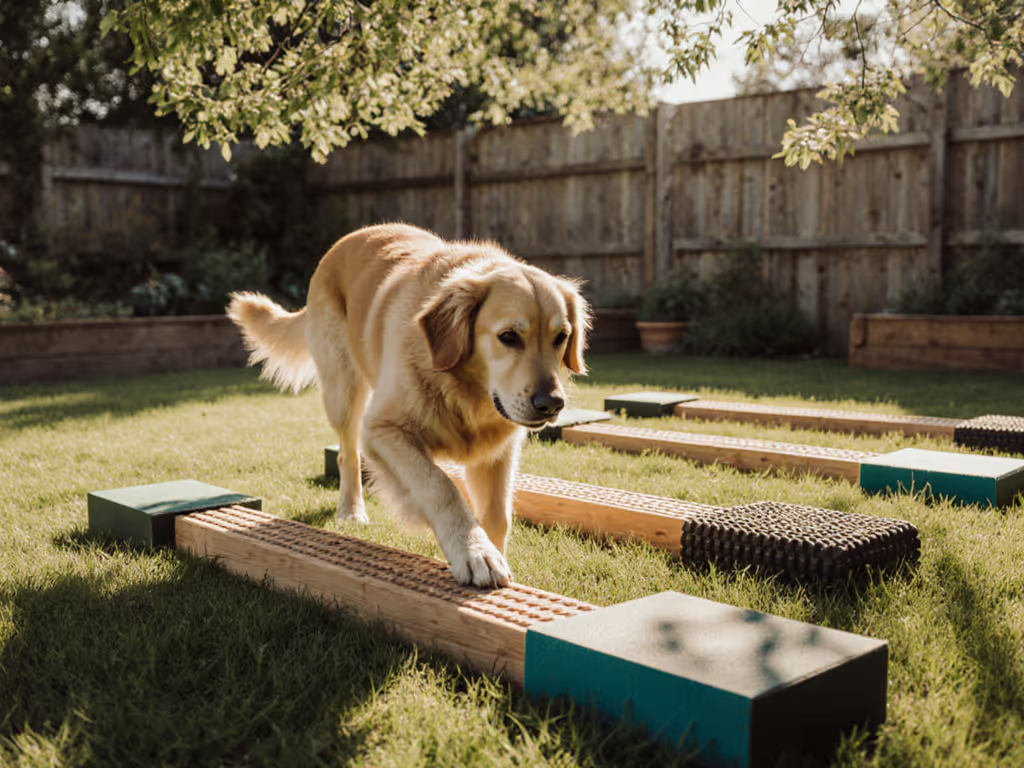
Canine proprioception training equips your dog with deliberate body awareness (the foundation for coordinated movement, sustained focus, and resilient behavior across real-world contexts). Unlike flashy gadgets that promise overnight fixes, dog body awareness exercises rebuild the neural pathways that connect your dog's brain to their muscles, creating the precision and confidence that translates from home to sidewalk to trail.[1]
Proprioception refers to your dog's ability to sense where their body is in space, how it's moving, and how to adjust weight and balance in response to shifting terrain or distractions.[3] When this system is sharp (whether your dog is recovering from surgery, aging gracefully, or training for consistent leash behavior), everything becomes easier. Pulling decreases. Reactivity softens. Engagement deepens.
This guide maps the science onto time-boxed steps you can execute in your own context, starting today.
Why Does Proprioceptive Training Matter for Your Dog?
Proprioception isn't an obscure concept reserved for veterinary rehab clinics. It directly shapes everyday behavior. A dog with strong body awareness holds a sit straighter, yields to gentle leash guidance without leaning, and maintains focus despite commotion because their brain is busy attending to their own movement, not spiraling into reactivity.
The research supports this. Proprioceptive training strengthens the communication between your dog's nervous system and muscles, improving neuromuscular contraction and motor function.[3] This means better gait, more efficient weight distribution, and reduced joint strain. For aging dogs, this translates to better mobility and reduced arthritis risk.[3] For puppies and young adults, it builds the motor control foundation that makes training and behavior management dramatically easier.
Beyond the physical, body awareness training engages your dog mentally. These exercises demand focus and decision-making; your dog isn't passively following; they're problem-solving. Most dogs find this deeply rewarding, particularly when paired with clear rewards for calm, controlled movement.[1]
What's the Difference Between Proprioception and Regular Exercise?
A 20-minute walk doesn't build proprioception; it burns energy. Proprioceptive work is intentional, low-speed, and cognitively demanding. You're not asking your dog to run faster or farther. You're asking them to move slowly and deliberately over varied terrain, adjusting their feet with precision.
Think of the difference between sprinting and a yoga flow. Both are exercise, but only one teaches your body where it is in space. Proprioceptive drills are the canine equivalent of that yoga flow (conscious, controlled, and built on small progressions).[1][4] If you're new to fitness concepts, see our Canine Fitness Basics for safe, age-appropriate guidelines.
What Exercises Should You Start With?
Begin with exercises that require minimal equipment and can be completed in short windows (5 to 10 minutes, three to four times per week). The goal is consistency, not intensity.
Foundation Drills (Week 1-2)
Pole Work Lay 3-4 broom handles or pool noodles on flat ground, spaced so your dog naturally steps over them. Walk alongside at a slow pace. Reward calm, deliberate paw placement (not speed). Repeat 2-3 passes, then stop. This teaches foot awareness and rhythm.[1] For spacing, progression, and gait benefits, see our cavaletti pole training guide.
Cue-criteria-reward: "Let's go slow" (cue) → dog places each paw intentionally between poles (criteria) → treat and verbal praise (reward).
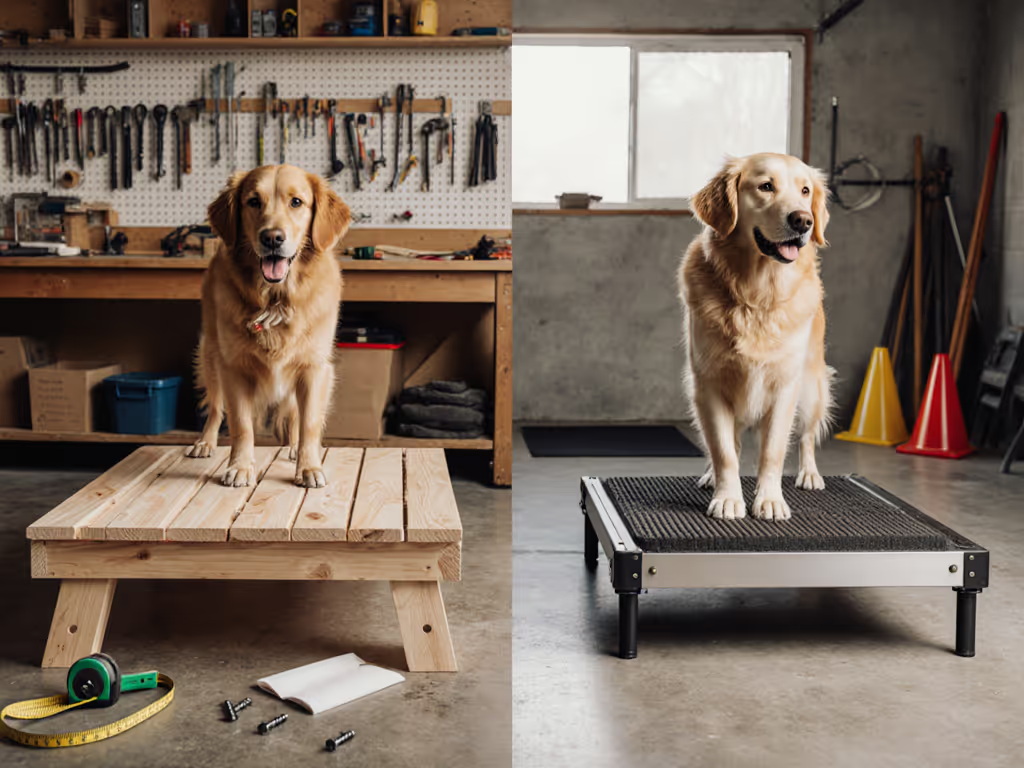
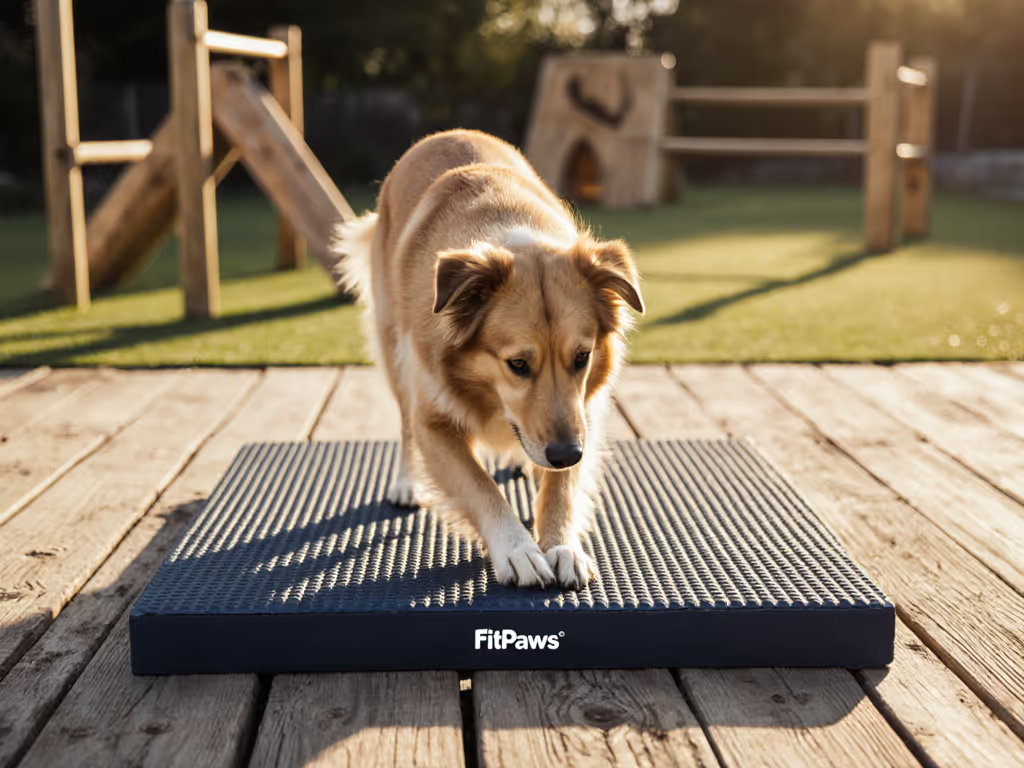
Balance Work on Stable Surfaces Have your dog stand on a folded towel, low cushion, or yoga mat for 5 seconds. This seems simple, but it activates stabilizing muscles and improves joint control.[1] When you're ready to add equipment, compare balance pads vs discs. Repeat 3 times; rest between sets.
Cue-criteria-reward: "Stand tall" (cue) → dog holds position with engaged core, head up, weight balanced (criteria) → reward (reward).
Intermediate Drills (Week 3-6)
Back-Up Steps Guide your dog backward 3-5 steps using gentle leash guidance or a hand lure. This isolates hind-leg awareness and builds body-length awareness.[1] Back-ups also deepen loose-leash connection; your dog learns they can influence direction through subtle communication, not pulling.
Cue-criteria-reward: "Back" (cue) → controlled backward steps, rear engaged, no rushing (criteria) → marker word ("Yes!") and treat (reward).
Slow Pivots Have your dog stand in a square stance (all four limbs weight-bearing, body aligned). Guide them to pivot their rear end around your left leg, keeping their front feet stationary. Repeat on the right side. This builds front-to-back isolation and is surprisingly challenging.[4]
Advanced Progressions (Week 7+)
Surface Exploration Walk your dog slowly across varied textures (grass, gravel, carpet, uneven ground) at a calm pace. The variation forces constant micro-adjustments in weight and balance, building resilience.[1] Pause on each surface for 10-15 seconds.
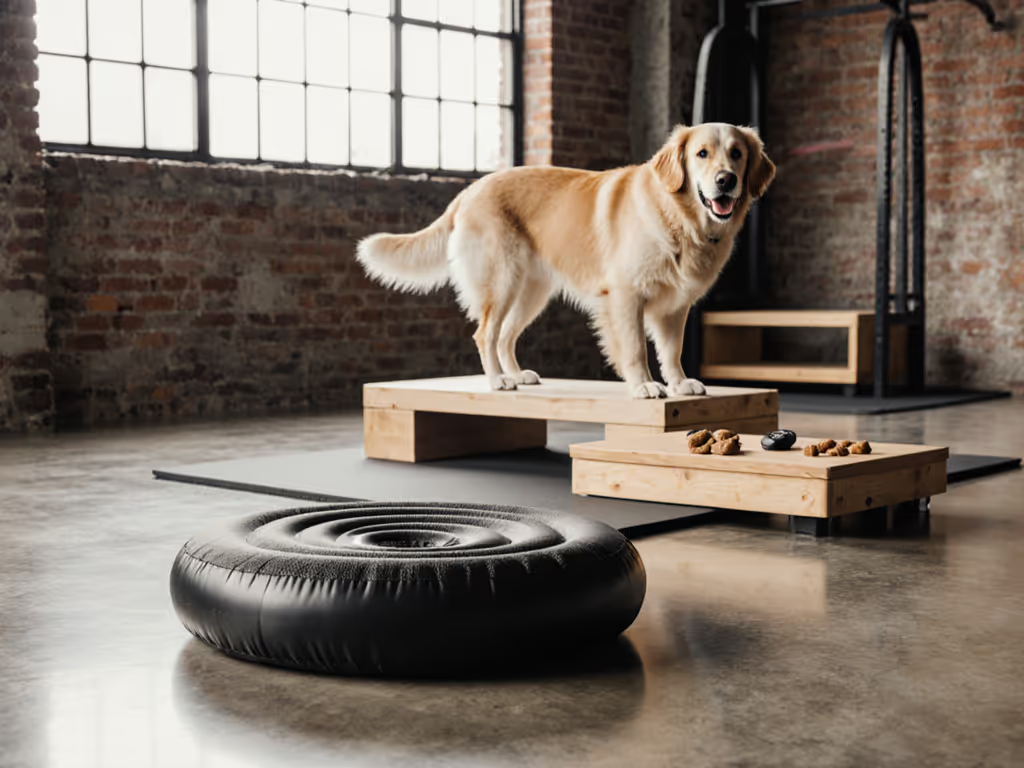
Step Work Have your dog place their front paws on a low step (4-6 inches high, adapted to size). Hold for 5 seconds with body straight, tummy engaged, head up. Repeat 3-5 times.[4] Challenge can increase by asking head movements side-to-side while holding position.
How Fit First, Then Features, Always Powered by Positive Reinforcement
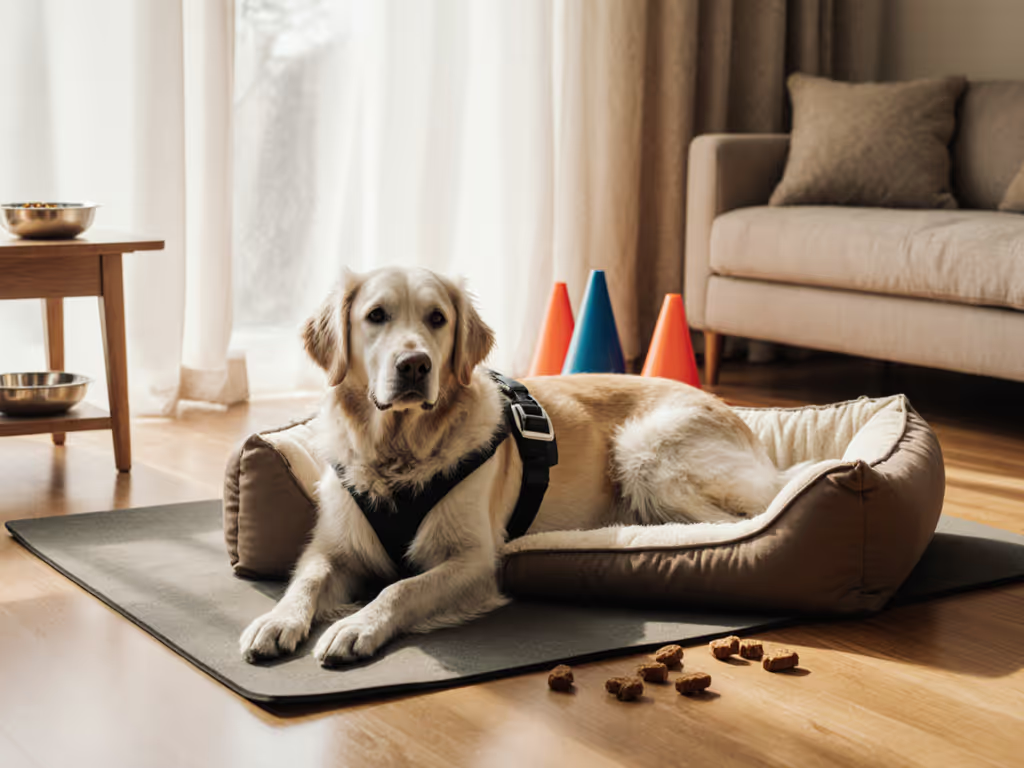
Gear matters, but only after you've mapped the behavior goal. A dog who struggles with jumping on guests needs foundation work (body awareness, settling) paired with appropriate equipment that supports the training plan, not replaces it. A reactive dog pulling on busy streets benefits from a Y-front harness that distributes pressure across the chest and allows clean leash guidance, combined with time-boxed decompression drills that build confidence in high-stimulus contexts. The equipment should enable reps your dog can win, not punish behavior.
One rainy evening, I worked with a foster who pinned himself behind me at a crosswalk, a classic freeze response in an overwhelming moment. The previous handler had cycled through three different gadgets, each promising calm. What actually shifted things was a well-fitted harness paired with three short decompression drills: slow breathing beside me, step-forward-and-pause-for-reward at a distance, and then a quiet walk down the same route at a different time of day. The next evening, we tried the crosswalk again. Loose leash. Soft eyes. Fewer reactive looks. The dog trusted the plan because the plan had worked before, and the equipment had done its job, gotten out of the way of good training reps.
Clear Safety Notes
- Stop immediately if your dog shows pain, limping, or avoidance. These drills are low-impact, but individual dogs have varying tolerance. Consult your veterinarian if pain persists.
- Always use positive reinforcement. Reward what you want to see. Backing away or pressure should never accompany these exercises.
- Keep sessions short. 5-10 minutes prevents fatigue and maintains focus. A tired dog is a sloppy-form dog.
- Progress slowly. Spend 2-3 weeks at each level before advancing. Consistency beats speed.
- Hydrate and rest. Even low-impact work requires recovery, especially for puppies, seniors, or working dogs.
Your Next Steps
This week, pick one foundation drill (either pole work or balance work). Set a specific time (e.g., Tuesday and Friday evenings, 5-10 minutes). Practice 3 times. Record one rep on video so you can assess form: Are your dog's movements deliberate? Is their core engaged? Is excitement or rushing creeping in? For clean self-review and slow-motion breakdowns, try these training video analysis apps.
Once that drill feels solid and your dog is hunting for the exercise, add a second one. Build the habit before adding complexity. The dog who masters slow, intentional movement across poles will transfer that precision to leash guidance, settle-on-mat, and recalls in distracting contexts (because you've taught them how to think about their movement, not just react).
Proprioceptive training is an investment in clarity. For your dog, it's the difference between confusion and competence. For you, it's the pathway to walks that feel collaborative, not combative. Start today, stay structured, and let the reps do the work.
Related Articles