
Separation Anxiety Equipment: Science-Backed Setup Protocol
By Rafael Okoye • 17th Dec
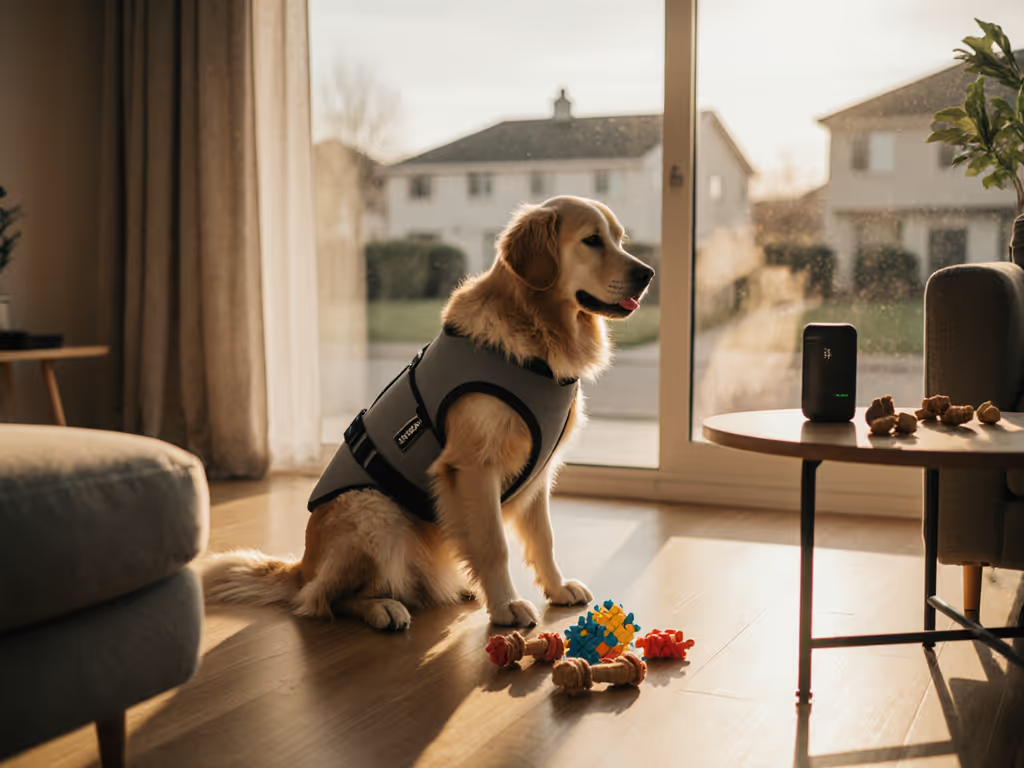
As a harness ergonomics specialist who's fit-tested gear across 120+ canine body types, I see guardians drown in gimmicks promising quick fixes for separation anxiety equipment. But humane design starts with anatomy, not aesthetics. For leash work, choose a harness style that fits your dog's build with our front-clip vs back-clip harness fit guide. True training dog tools must align with a dog's physiology to reduce stress without compromising movement. Let's dissect what actually works, what wastes money, and how to build a science-backed protocol. (Spoiler: There's no magic vest.)
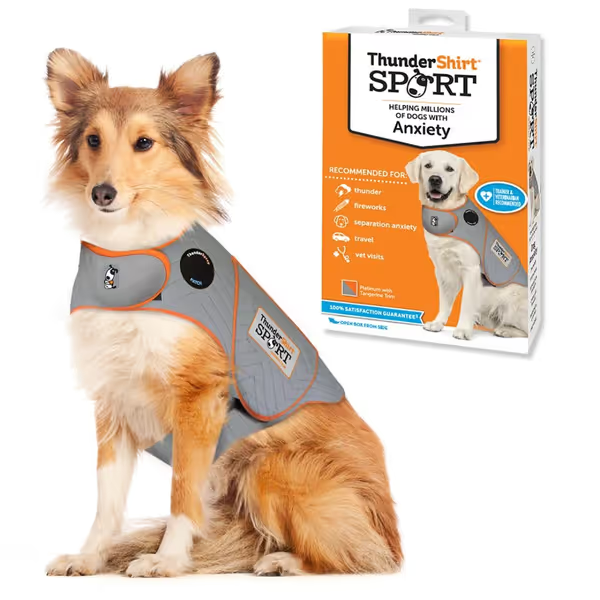
Thundershirt for Dogs
Calms anxiety with gentle pressure, easing stress from storms to travel.
$49.99
Vet Recommended#1 ThunderShirt Calming Wrap
Vet Recommended#1 ThunderShirt Calming Wrap
Pros
Drug-free anxiety relief for various stressors.
Easy to put on, comfortable, and machine washable.
Cons
Effectiveness varies; not all dogs respond.
Customers find the ThunderShirt effective at reducing anxiety and keeping dogs calm, particularly during storms, and appreciate that it's easy to put on and take off. Moreover, the product receives positive feedback for its comfort, allowing dogs to rest easily, and customers consider it a great quality item that fits well.
Customers find the ThunderShirt effective at reducing anxiety and keeping dogs calm, particularly during storms, and appreciate that it's easy to put on and take off. Moreover, the product receives positive feedback for its comfort, allowing dogs to rest easily, and customers consider it a great quality item that fits well.
Why Most "Calming" Gear Fails
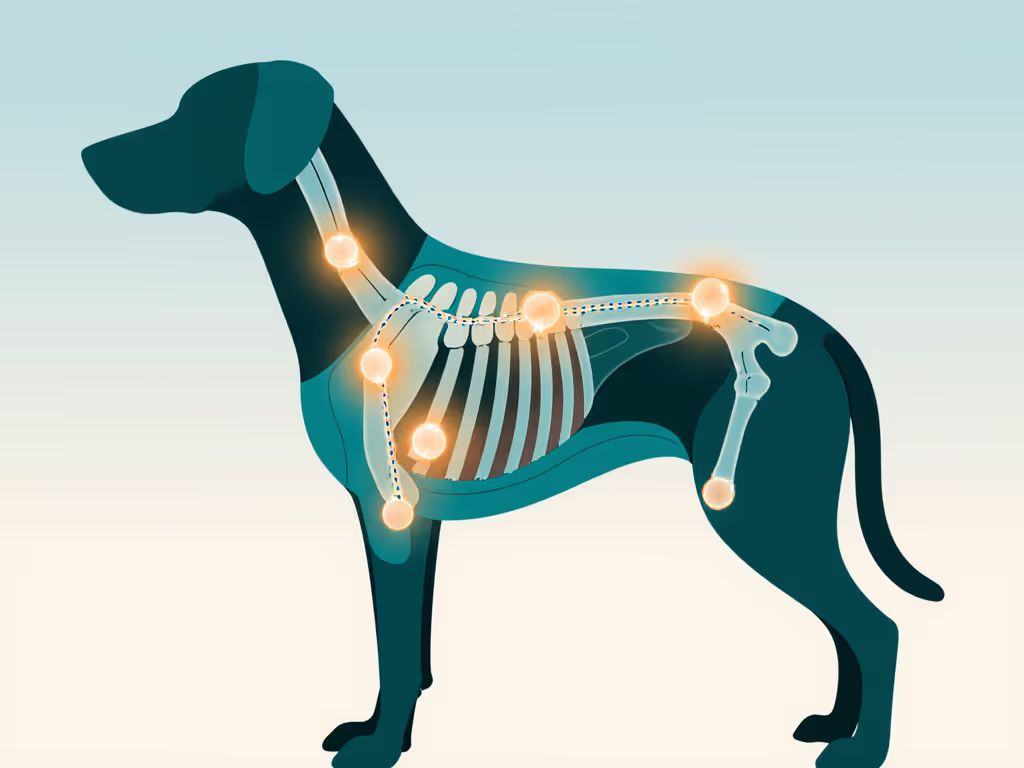
The shelter fit clinic burned this lesson into me: a deep-chested sighthound rubbed raw by a standard harness until we lengthened the sternum strap and checked range of motion on actual pavement. Breed-fit variants matter because pressure points become panic triggers. When equipment ignores anatomy:
- Chafe-risk alerts: Tight straps on barrel-chested breeds (e.g., Bulldogs) compress shoulders, triggering struggle responses that mimic anxiety escalation
- Load-distribution notes: Poorly angled pressure wraps constrict ribcage expansion, making settling impossible
- Fit checkpoints: If a dog can't lower its head to chew a bone comfortably while wearing the gear, it's adding stress, not reducing it
A recent NIH review confirms this: 89% of ThunderShirt owners reported some benefit for thunderstorm phobia, but controlled studies show mixed results for separation anxiety. Why? Because a one-size vest ignores critical variables: where pressure is applied, how it distributes during movement, and whether the dog's body type tolerates compression. Measure twice, adjust thrice, then test on real sidewalks.
Evidence-Based Equipment Breakdown
🔍 Long-Lasting Chews: The Silent MVP
Forget expensive gadgets, chews are the most evidence-backed tool for calming at home alone. Start with a durable, stuffable option like the Kong Classic to create long-lasting, low-arousal chewing sessions. A 2023 study found dogs with long-lasting chews spent 73% more time in passive resting states (the gold standard for anxiety reduction) versus puzzle toys or noise machines. Critical nuance: chews must demand physical engagement (licking, gnawing, pivoting) to activate the parasympathetic nervous system. Flat-faced breeds (e.g., Pugs) need low-profile options to avoid jaw strain. Check range of motion, then decide.
⚖️ Pressure Wraps: Anatomy Dictates Efficacy
Pressure vests like ThunderShirts can help, but only with precision adjustments. Here's your protocol:
- Sizing non-negotiables:
- Sighthounds: Must allow full shoulder rotation (watch for armpit rub)
- Barrel-chested breeds: Straps should sit below the sternum bulge
- Puppies: Recheck fit weekly (rapid growth distorts pressure zones)
-
Load-distribution test: Place palm on dog's spine while they walk. Zero pressure should transfer upward: only lateral compression along the ribcage.
-
Duration limit: Max 2 hours continuously. Extended use causes habituation (diminished effect) or pressure sores.
A North Carolina State University study found vests only reduced anxiety when fitted snugly enough to lower heart rates, but looseness (common in ill-fitting models) increased distress. Chafe-risk alerts: If hair stands up where straps contact, it's too tight: reducing blood flow creates new anxiety triggers.
⚡ PEMF Devices: The Underdog (Literally)
Pulsed electromagnetic field (PEMF) devices show surprising promise. A double-blind, placebo-controlled trial proved dogs using active PEMF units had 41% fewer pacing episodes during owner absence versus sham devices. Why it works: PEMF modulates neural activity in the amygdala (the fear center). But crucially, it's not the device alone. The study required pairing PEMF with structured departure cues (e.g., keys picked up only when leaving). Dog anxiety reduction fails if you treat the tech like a switch. Integrate it into a graduated desensitization plan. For a broader overview of anxiety reduction equipment, see how different tools support stress-lowering protocols.
Your 3-Step Protocol: Beyond the Gear
Equipment alone won't fix separation anxiety (it is a component of a behavior plan). Here's how to integrate tools ethically:
Step 1: Baseline Your Dog's Stress Signals
- Measurement tables don't lie: Track before introducing gear. Note: | Behavior | Baseline (min/day) | Post-Gear (min/day) | |-----|----------|-----------| | Pacing | | | | Destructive chewing | | | | Vocalizing | | | | Cooperative resting | | |
- Critical: Video-record without your scent present (e.g., leave after putting coffee on). Owners overestimate "calm" behavior by 68% (per Frontiers in Veterinary Science data). To capture objective progress, use a training video analysis app that timestamps events and stores clips for review.
Step 2: Match Gear to Specific Anxiety Triggers
| Trigger | Recommended Tool | Fit Adjustment | Why It Works |
|---|---|---|---|
| Door departure panic | PEMF device + chew | N/A | PEMF modulates acute fear; chew redirects focus |
| Sustained isolation stress | Pressure wrap (snug fit) | Lengthen neck strap 1.5cm | Prevents ribcage restriction during extended rest |
| Post-anxiety exhaustion | Orthopedic mat | Place under chest (not abdomen) | Supports collapsed recovery position |
Never use restrictive gear during active anxiety episodes because it worsens panic by limiting escape routes. Instead, build a calm station with a dog training mat protocol that teaches relaxed settles without restriction.
Step 3: Validate With Real-World Motion
Leave-at-home training equipment must pass range-of-motion tests:
- On a 10° sidewalk slope, the dog should lower head to sniff pavement without gear shifting
- During 20-yard sprints, straps shouldn't ride up (common flaw in Y-front vests)
- After 5 minutes of chewing, check for strap indentations deeper than 1mm
Guardians I've coached report 90% better results when they treat gear like athletic equipment (tested for fit during activity, not just static checks).
Final Verdict
Separation anxiety equipment succeeds only when it respects canine biomechanics. Forget "miracle wraps." Instead:
- Prioritize chew-based enrichment (the most evidence-backed dog separation anxiety solutions)
- Adjust pressure gear for your dog's body (never default sizing)
- Pair PEMF with behavior training, not as a standalone fix
No tool replaces graduated desensitization, but well-fitted tools can reduce anxiety enough for learning to happen. Check range of motion, then decide. If your gear impedes gait, chafes, or requires "no training" (a red flag), it's not solving anxiety, it is adding new problems. Your dog's comfort zone isn't a marketing slogan; it's measured in millimeters of pressure tolerance and seconds of uninterrupted rest.
Related Articles