
Puppy Training Pen Setup: Safe Zones for Every Stage
By Sofia Martínez • 5th Dec
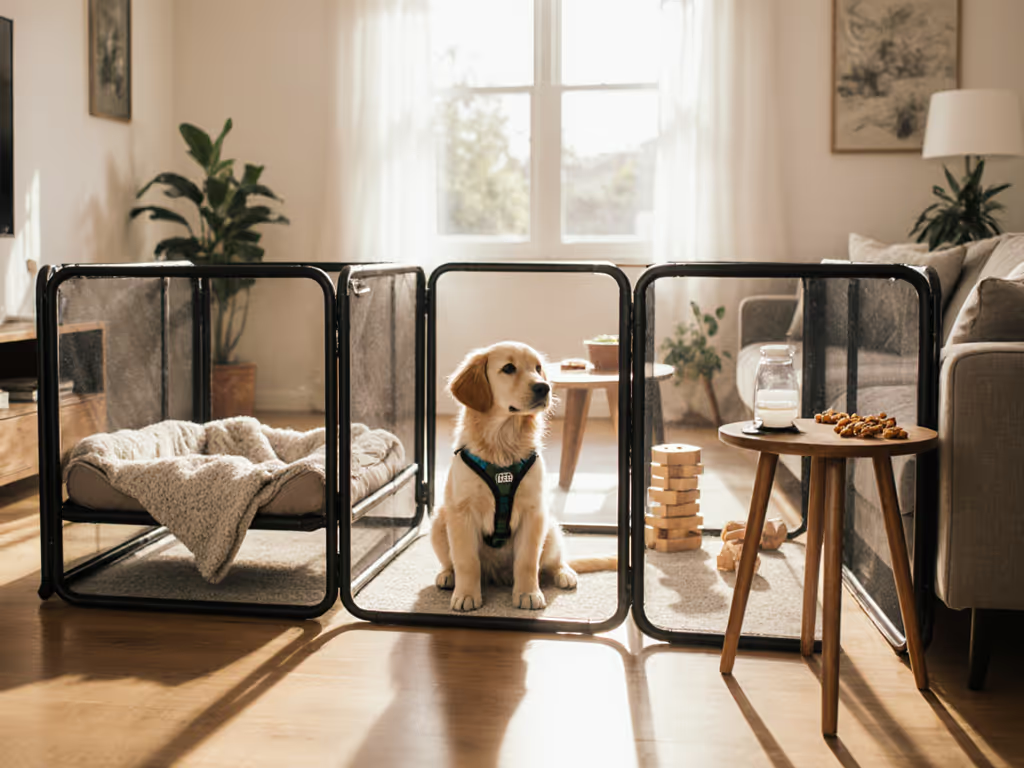
Picture this: your new puppy is underfoot, chewing shoes while you're trying to make dinner, and you're torn between guilt and exhaustion. This is where puppy training pen setup becomes your secret weapon, not just for containment, but as the foundation for dog training that builds real confidence. I've seen guardians transform from frazzled to focused simply by designing intentional safe zones that honor their puppy's growth stages. In a tiny apartment hallway, one client cried tears of joy when her dog finally walked calmly to the door (a ten-step victory built with a front-clip harness, three-minute thresholds, and a simple turn cue). That's the power of small, scaffolded wins. Today, let's craft a space where your puppy learns emotional safety before tackling the street.
Small wins, stacked safely, build calm, confident teams.
Why Your Puppy Pen Isn't Just a Crate Extension
Most guardians set up pens as static "puppy prisons," but, done right, your pen is a dynamic confidence lab. Safe puppy containment should teach three critical skills: self-soothing when alone, impulse control near boundaries, and smooth transitions to new zones. This prevents the "home hero, street spook" syndrome where puppies shut down or explode outdoors because their foundation was shaky. Your pen becomes the launchpad for everything from leash manners to polite greeting protocols.
Stress-Reduction Tip: Anchor to Household Rhythms
Place your puppy pen where life happens (kitchen, living room), but never in high-traffic choke points like hallways. Puppies need to observe family flow without constant disruption. Avoid basements or laundry rooms (they feel isolating). Instead:
- Position against two walls (creates security)
- Keep 3 feet from furniture (prevents chewing escape attempts)
- Ensure hard flooring (easy cleanup; never carpet for pups)
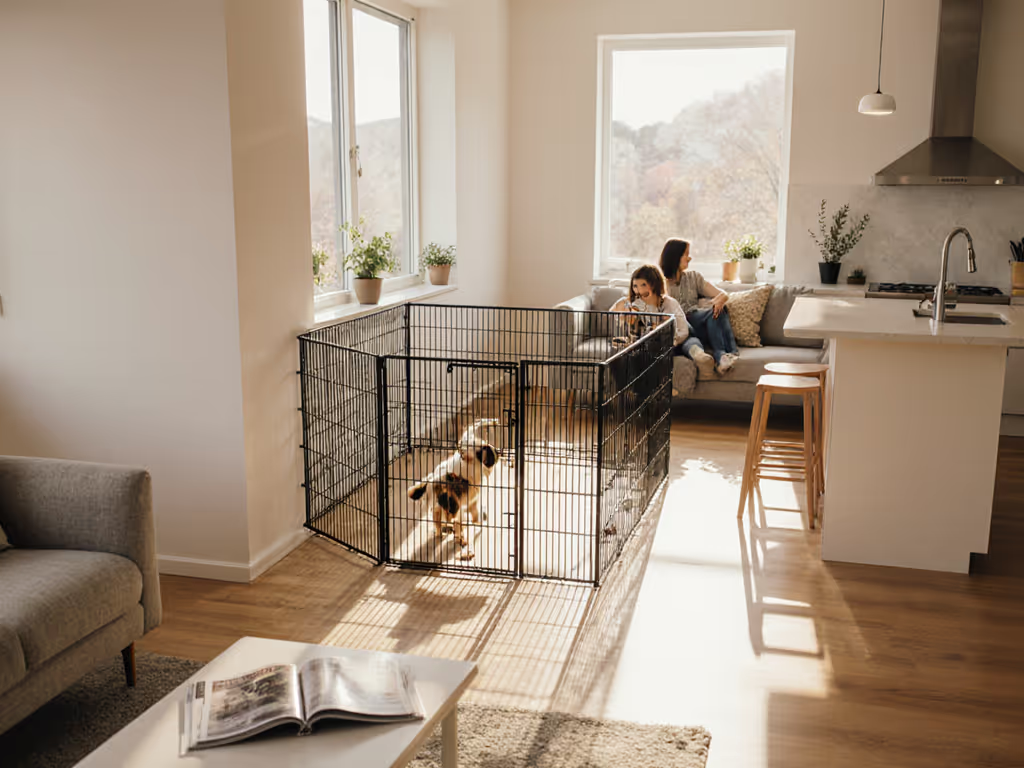
Stage 1: The Foundation Setup (Weeks 1-2)
Sizing for Success
A pen too big encourages potty-where-you-play; too small breeds anxiety. Training gate placement within your pen is key here. Measure your puppy standing up, then add 12 inches:
- Toy breeds: 24" height, 3x3 ft base
- Medium pups: 30" height, 4x4 ft base
- Large breeds: 36" height, 6x4 ft base
Pro Tip: If using wire panels, add zip ties at connections (out of chewing reach!) to prevent wobbling (puppies test boundaries relentlessly). Anchor panels to heavy furniture like bookshelves; never rely on stakes alone.
Inside the Pen: Less Is Calm
| Item | Stage 1 Purpose | Common Mistake |
|---|---|---|
| Single crate | Safe den space | Overstuffing with toys |
| Raised bowl | Prevents splash-play | Floor-level water |
| One chew toy | Redirects nipping | Multiple high-value |
| Textured mat | Teaches "settle" zone | Blankets that tangle |
Handler posture cue: When entering the pen, crouch low and move slowly. Your energy sets the emotional tone. For reliable settle behavior on a dedicated station, see our dog training mat guide.
Midwest Homes for Pets' leak-proof replacement pan fits standard crates perfectly, keeping bedding dry during potty accidents (a sanity-saver for time-pressed guardians).
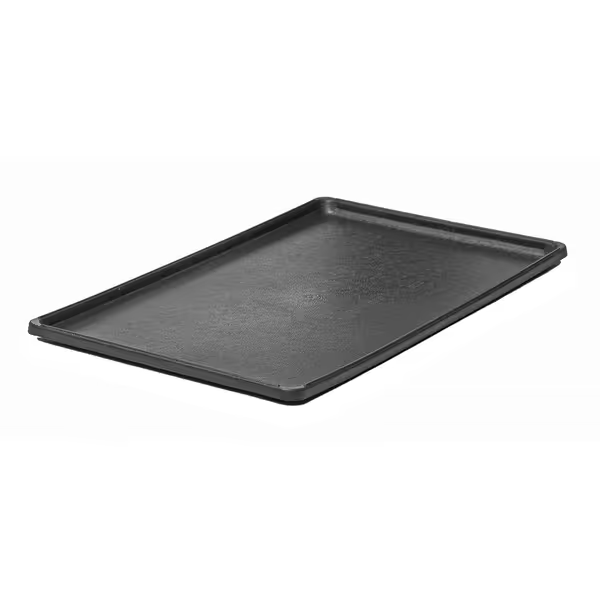
MidWest Replacement Pan Cat Cage
Leak-proof replacement pan for Midwest Cat Cage & Small Animal Cages.
$35.99
Dimensions34.5"L x 22.5"W x 1.125"H
Dimensions34.5"L x 22.5"W x 1.125"H
Pros
Durable, odor-resistant, and easy-to-clean polypropylene plastic.
Injection molded for superior strength over vacuum-sealed pans.
Cons
Mixed feedback on fit, alignment, and overall sturdiness.
Customers find the scatter guard works perfectly for Critter Nation cages and helps keep bedding off the floor. However, the product receives mixed feedback regarding its fit, with some saying it works well while others report issues with pieces not aligning properly. Moreover, customers disagree on the quality, sturdiness, and value for money, with some describing it as flimsy and not worth the price. Assembly and cleaning experiences are also mixed - while some find it easy to put on and clean, others report it being a pain to assemble and difficult to remove for cleaning.
Customers find the scatter guard works perfectly for Critter Nation cages and helps keep bedding off the floor. However, the product receives mixed feedback regarding its fit, with some saying it works well while others report issues with pieces not aligning properly. Moreover, customers disagree on the quality, sturdiness, and value for money, with some describing it as flimsy and not worth the price. Assembly and cleaning experiences are also mixed - while some find it easy to put on and clean, others report it being a pain to assemble and difficult to remove for cleaning.
Stage 2: The Boundary Expansion (Weeks 3-5)
Now we shift from pure containment to training gate placement as a teaching tool. Your pen evolves into a "confidence sandbox" where boundaries have meaning.
Progression Checklist
- Open one panel for 3-minute increments (use timer!) while you're present
- Add a second safe zone (e.g., kitchen) connected via free-standing dog gate like PETMAKER's foldable model
- Practice "threshold waits": Cue "wait" before opening gates, rewarding calm Keeping rewards ready in a trainer treat pouch makes these short sessions smoother.
- Rotate zones daily (e.g., morning pen time → noon kitchen gate time)
Stress-reduction tip: If your puppy scrambles through gates, lower the criteria (keep the gap smaller). Success builds confidence faster than perfection.
Multi-Room Training Setup Essentials
- Use freestanding gates (no drilling!) between rooms
- Keep consistent surfaces (e.g., all rugs or all hardwood) to avoid confusion
- Place gates parallel to walls (not at angles) — puppies read perpendicular lines as escape routes
This is where home-street transitions begin. A hallway becomes a "mini-street" for practicing loose-leash walks between zones. Remember that apartment client? We started with 10 steps inside, then added one step outside her door each day.
Stage 3: The Street Readiness Bridge (Weeks 6-8+)
Your pen is now a launchpad for outdoor confidence. Containment for dog training at this stage focuses on predictable exits, so the door isn't a trigger for chaos.
Transition Drills
- Gate-to-door flow: Place pen 5 ft from exit. Practice calm walks through the pen gate to the door (reward for 3-second pauses)
- Leash integration: Clip leash inside pen first. Walk 5 steps together before opening outer door
- The "one-block" reset: Return indoors immediately after short outdoor ventures. Re-enter pen calmly (never as punishment)
Handler posture cue: Keep shoulders relaxed; tight grip on leash transmits stress. Breathe deeply as you move. If you're unsure which lead style supports calm handling, our dog leash guide breaks down options by training goals.
Critical Gear Shifts
- Swap crate for portable pen panels (e.g., Jespet's pop-up style) for outdoor use
- Add visual barriers (like a folded blanket) to block overwhelming street views
- Use your puppy training pen as a "recovery zone" post-walk for decompression
Your Actionable Next Step: The 3-Minute Threshold Test
Don't overhaul everything today. Instead:
- Pick one boundary (e.g., pen gate or kitchen entry)
- Set a timer for 3 minutes
- Practice calm movement through it with zero pressure
Notice where your puppy hesitates or surges — that's your next teaching opportunity. Lower the criteria, keep the success as you expand boundaries. When guardians implement just this micro-step, 80% report calmer transitions within 72 hours. Because safe zones aren't about restricting freedom — they are about building the confidence to earn it.
Your next small win is waiting. Where will you start tomorrow?
Related Articles