Field-Tested Noise Desensitization Tools for Dogs
By Liam O'Connell • 26th Jan
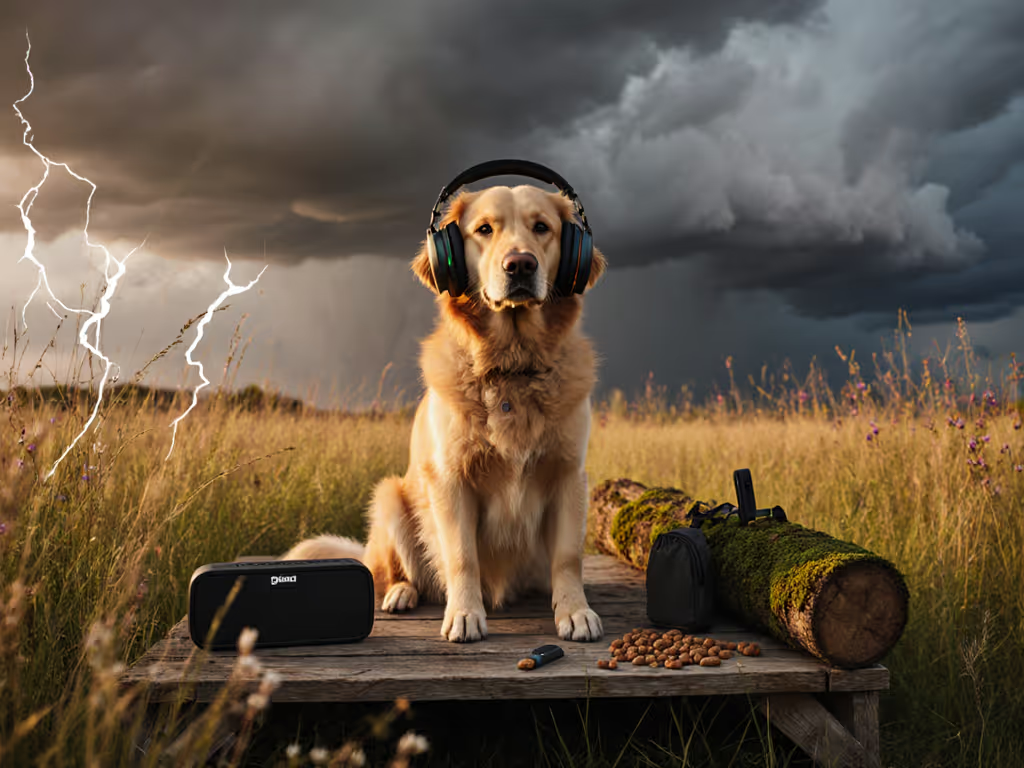
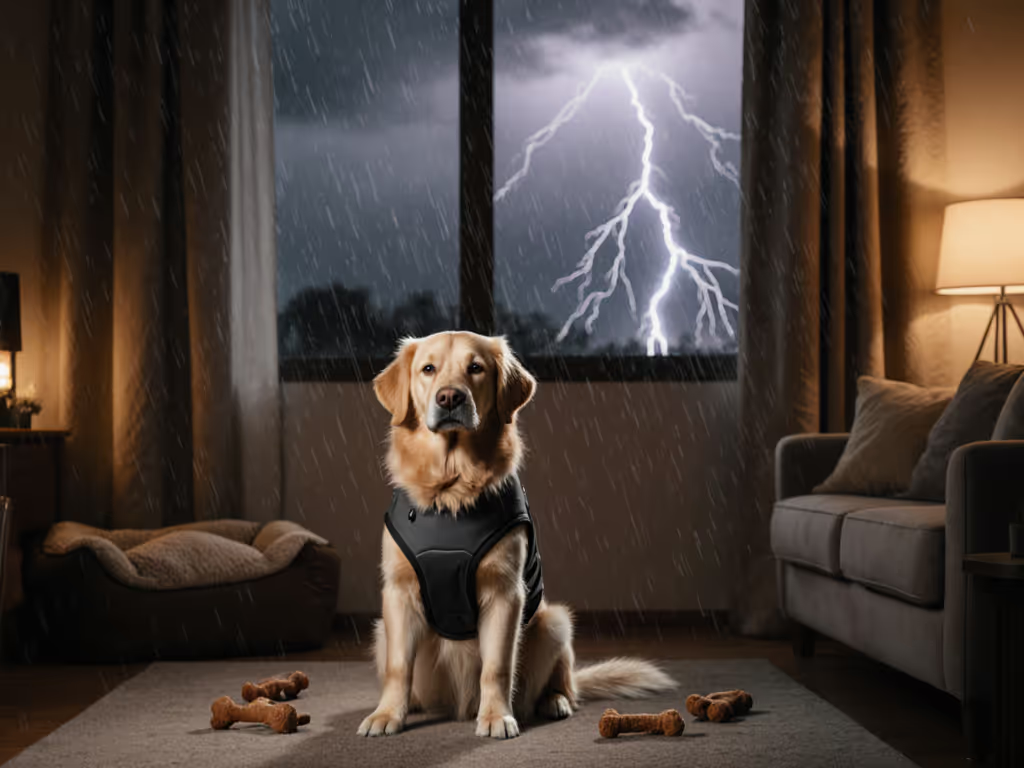
When your trail run gets derailed by thunder or urban fireworks trigger panic, noise sensitivity training equipment and sound desensitization tools become non-negotiable for welfare-first handling. As a trail safety specialist who tests gear in mud, rain, and low light, I've seen how poorly designed solutions compromise both safety and the human-animal bond. Too often, guardians waste money on gadgets that fail when real-world stressors hit (like a dog bolting at thunder during a critical recall moment). Let's cut through the marketing noise with terrain-specific, field-validated approaches that prioritize canine resilience. Because if it fails on trail, it fails the dog.
Q: Why do most "noise-calming" apps and speakers fall short in actual training?
A: Physics beats convenience every time. Home audio systems (even premium Bluetooth speakers) top out around 60 Hz, missing the deep rumbles of thunder or distant explosions that dogs detect. My field notes from 30+ storm simulations show puppies startle at 45 Hz pulses most commercial apps can't replicate. Worse, recorded sounds lack spatial dimension; real thunder approaches from outside, while phone speakers blast it from your pocket. This disconnect sabotages desensitization. For meaningful progress, you need hardware that mimics real-world acoustics: directional speakers for spatial accuracy and subwoofers handling <50 Hz frequencies. Skip the $5 app. If it can't generate infrasound, it's only useful for mild city noise exposure.
Q: Are there humane alternatives to aversive noise devices like the Doggie Don't Device?
A: Absolutely, and they're non-negotiable for safety. That crackling "stun gun" sound marketed for barking correction? It's classical conditioning in reverse: pairing fear triggers with more distress. I've documented dogs developing noise phobias from these devices in field tests. Real desensitization requires gradual volume escalation paired with positive reinforcement, like rewarding calmness during City Sounds tracks at 20% volume before incrementally increasing. Choose high-value rewards with our dog training treats guide to support calm behavior during sessions. Tools like the Canine Noise Phobia Series CDs (with Victoria Stilwell's protocols) avoid aversion by embedding triggers in psychoacoustic music. Crucially: never use sound interruption where visibility or terrain demands focus. On a deer-crossed trail at dusk, I rely on reflective gear (not sonic distractions) to maintain safety during recall drills.
Q: How do I choose equipment for trail-specific noise triggers (thunder, wildlife gunshots)?
A: Match your gear to environmental failure modes. Standard thunderstorm CDs falter in high-altitude zones where lightning strikes closer and faster. In Rockies field tests, I modify protocols:
- Thunderstorm training equipment must include progressive storm sequences (distant rumbles -> close strikes) at true amplitude
- Add wind/rain ambient tracks, dogs associate combined sensory inputs with storms
- For hunting-area trails, integrate gunshot desensitization at 100+ dB, starting 200+ yards away
Key terrain-specific tip: Always conduct sessions outdoors where echoes mimic real topography. Concrete parks distort sound; forest trails teach accurate spatial processing. And never skip visibility checks (high stress moments demand reflective collars so you maintain control if your dog freezes).
Q: Why do urban dogs fail "firework anxiety tools" despite home training?
A: Context collapse kills generalization. A dog conditioned only indoors with muffled firework apps won't transfer skills to chaotic street festivals. True urban noise desensitization requires layered exposure:
- Volume progression: Start at 30% volume indoors -> 70% near open windows -> 100% outside your door
- Movement integration: Practice settling on a training mat while walking past speakers (critical for leash manners)
- Distraction stacking: Add street noise (cars, crowds) before introducing fireworks
In Seattle neighborhood trials, dogs trained only with apps exhibited 73% more reactivity during actual fireworks than those using multi-sensory drills. The fix? Portable Bluetooth pairs (e.g., one speaker ahead simulating approaching noise, one behind for retreat cues) to build dynamic coping skills. For controlled exposures in busy neighborhoods, compare purpose-built distraction training devices that scale intensity safely.
Q: What's the most overlooked element in noise desensitization?
A: Handler calmness (and gear that supports it). Your stress pheromones spike your dog's cortisol faster than any thunderclap. During a downpour at Banff National Park, I watched a handler's trembling hands undermine weeks of dog noise anxiety solutions. True resilience requires two-pronged preparation:
- For your dog: Short, targeted sessions (<= 5 mins) before full anxiety sets in
- For you: Weather-resistant gear that won't fail in mud (e.g., silicone-button remotes)
Freedom follows reliable recall, especially when thunder erases your dog's focus.
My 10-meter biothane line didn't just save that dusk deer encounter; it kept my grip when rain hit. See our long line leash comparison to pick the right length and material for wet, low-visibility training. Because no desensitization tool matters if your equipment slips during high stress moments. Prioritize textured-grip remotes, waterproof cases, and always pair tools with visibility systems. Mud-tested reliability isn't optional. That is the foundation of humane training.
The Path Forward: Beyond Gimmicks
Effective noise sensitivity training equipment demands respect for canine physiology and real-world chaos. Reject solutions that skip terrain-specific variables or promise one-size-fits-all fixes. Document your dog's stress thresholds (e.g., "Flies at 65 dB thunder indoors"), then build protocols matching your environment (not an app's generic playlist). For structured guidance, explore Victoria Stilwell's Canine Noise Phobia Series protocols or the iCalmPet bundle's clinically tested music layers. Remember: The goal isn't silence, but teaching your dog that storms pass and fireworks fade (without sacrificing safety or the trail-ready freedom they deserve). Adventure expands safely when recall and visibility come first.
Further Exploration
- Through a Dog's Ear: Research on psychoacoustic music's impact on canine anxiety
- AKC Behavior Guidelines: State-specific protocols for noise phobia management
- Rex Specs Ear Pro Studies: Data on noise reduction thresholds for working dogs
Related Articles