Double Dog Leash Coupler FAQ For Safe, Tangle-Free Walks
By Rafael Okoye • 17th Sep

Quick answer
Yes—a double dog leash coupler is a real product format for walking two dogs, but it is not a guaranteed tangle-free solution.
- Key distinction: Look at the exact splitter’s branch lengths, connection points, handle design, load behavior, and care instructions. Evergreen’s claim about reducing tangles is not independent testing or a guarantee.
- Before using one: Robert Cabral recommends initially separating dogs for training so each can refocus on the handler. No general evidence establishes which coupler suits particular sizes, strengths, pulling patterns, or behavior combinations.
- Safety caveat: The product details and training recommendation discussed here do not establish that a coupler addresses pulling, reactivity, or over-arousal. Be especially cautious with retractable-leash systems; a published injury case involved recoiling hardware, but it did not evaluate ordinary couplers.
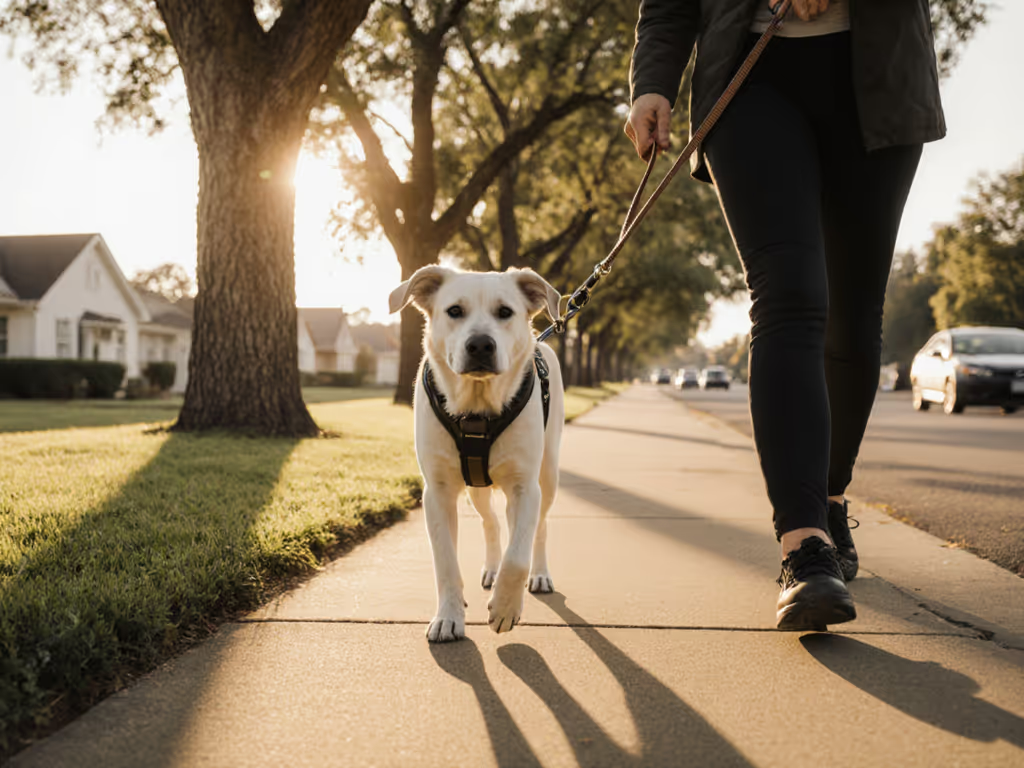
A double dog leash coupler (also called a two dog leash splitter) is a product format for two dogs, but it does not make every pair of dogs ready for walking two dogs on one leash. The useful question is not, "Will this eliminate tangles?" It is, "Can both dogs stay responsive enough that one shared connection does not reduce my ability to manage the walk?" Start with the dogs' training picture, then assess the gear's actual layout and limitations.
Check range of motion, then decide.
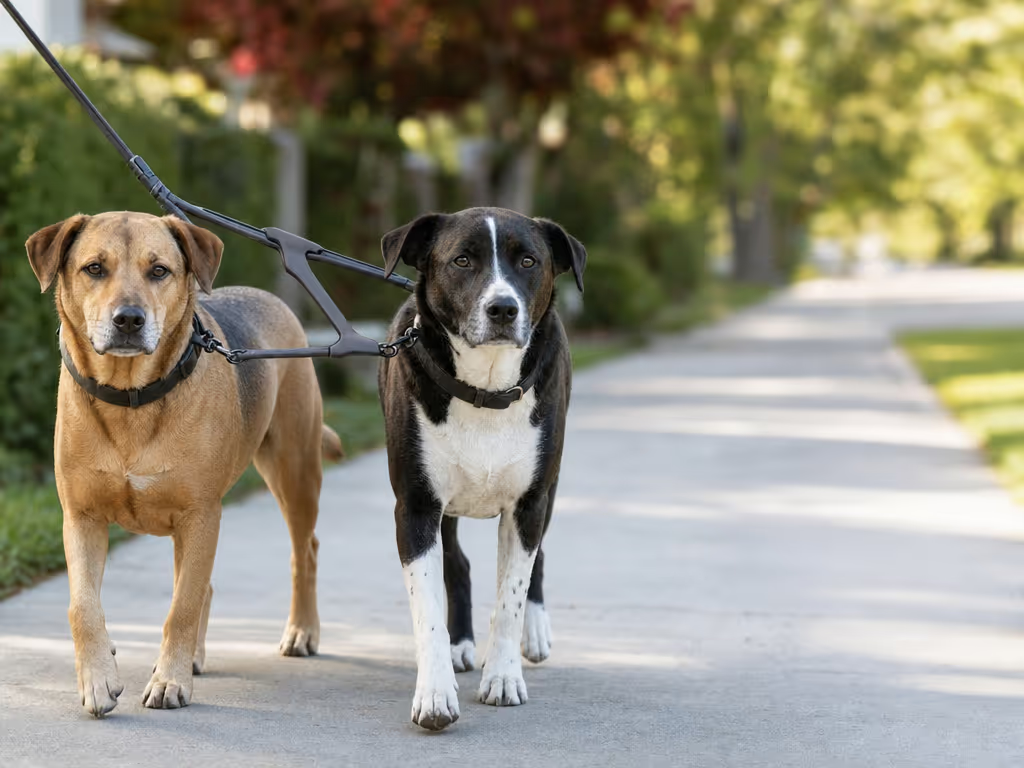
What is a double dog leash coupler?
A coupler is a product format for two dogs. It is not a universal solution for multi-dog walking, so review this guide to training leashes for different dogs and scenarios before choosing one.
For example, Evergreen Dog Co. describes its Waterproof Two Dog Leash as a BioThane two-dog leash splitter. The manufacturer lists total lengths of 6, 7, 8, or 10 feet (described as 3, 3.5, 4, or 5 feet per dog) and specifies a central O-ring plus a detachable 12-inch single-loop handle.
That Evergreen layout is worth understanding before you buy: the manufacturer specifies both a middle O-ring and a detachable handle. A manufacturer's stated details about length, handle arrangement, and connection points are more informative than a broad "no tangle" label.
Can a splitter guarantee tangle-free walks?
No. An anti-tangle leash coupler is a description or a manufacturer claim, not a promise that two moving dogs cannot cross paths or wrap lines around each other.
Evergreen says that using its splitter with certain swiveling components can highly reduce tangling and may frequently eliminate it. That is the manufacturer's claim, not independent performance testing, and even that wording leaves room for tangles. It is more accurate to expect a coupler to be a shared-leash arrangement than to expect it to control the dogs' movement for you.
Why "no tangle" is too high a bar
Two dogs bring two attention streams to one walk: scents, pedestrians, another dog, a sudden change in pace, or simply the urge to investigate opposite sides of the path. Robert Cabral recommends initially separating dogs for training so each can refocus on the handler. Nor does the available information establish which dog should receive the handler's attention first when both need it.
Load-distribution note: one manufacturer specifically states that its splitter does not adjust according to which dog pulls harder. That is a design limitation to keep in view rather than a detail to gloss over. The information available here does not establish which coupler configuration suits pairs with different sizes, strength, pulling patterns, or behavior needs.
Are double leashes good for dogs?
They can be a practical organizational tool for some households, but there is no blanket yes or no. A coupler's value depends on whether it preserves the quality of the walk for both dogs and the handler.
A useful first checkpoint is whether each dog can work with you without relying on the other dog's presence. Trainer Robert Cabral recommends initially separating dogs for training so each can refocus on the handler. That is a trainer's preparation recommendation, not a rule that every pair must always be walked separately. His recommendation does not establish when to introduce shared equipment.
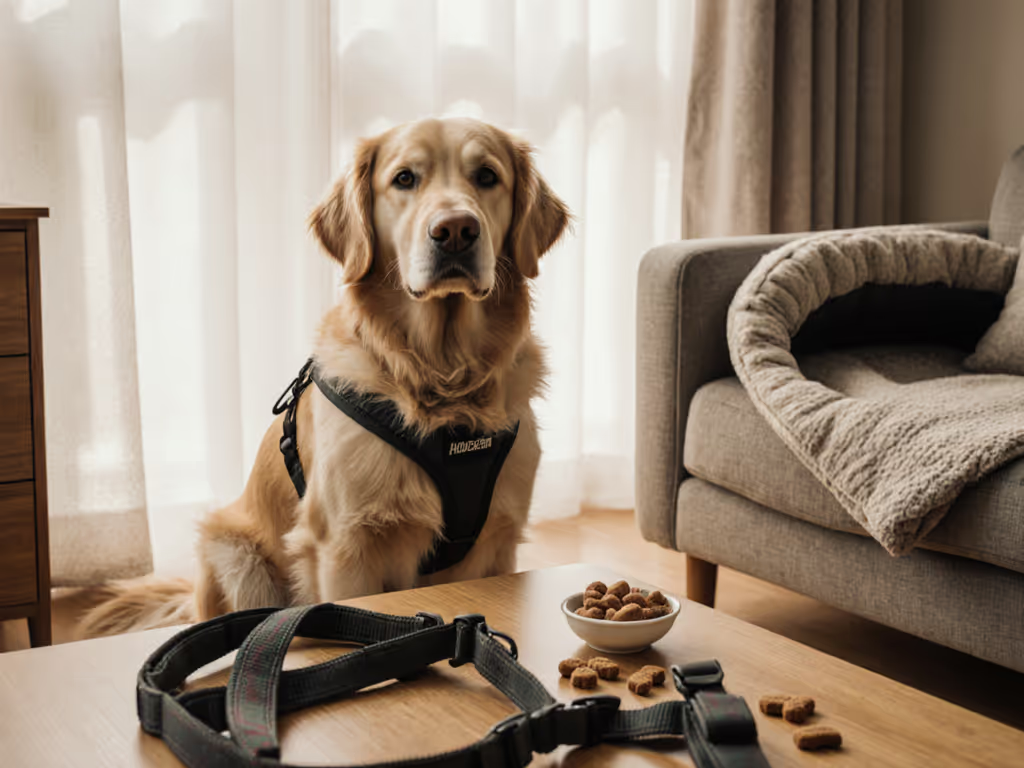
I favor equipment choices that begin with the body in front of you, not the tidy silhouette of a coordinated set. I treat movement as a fit checkpoint, not an afterthought. Measure twice, adjust thrice, then test on real sidewalks.
Chafe-risk alerts and behavior limits
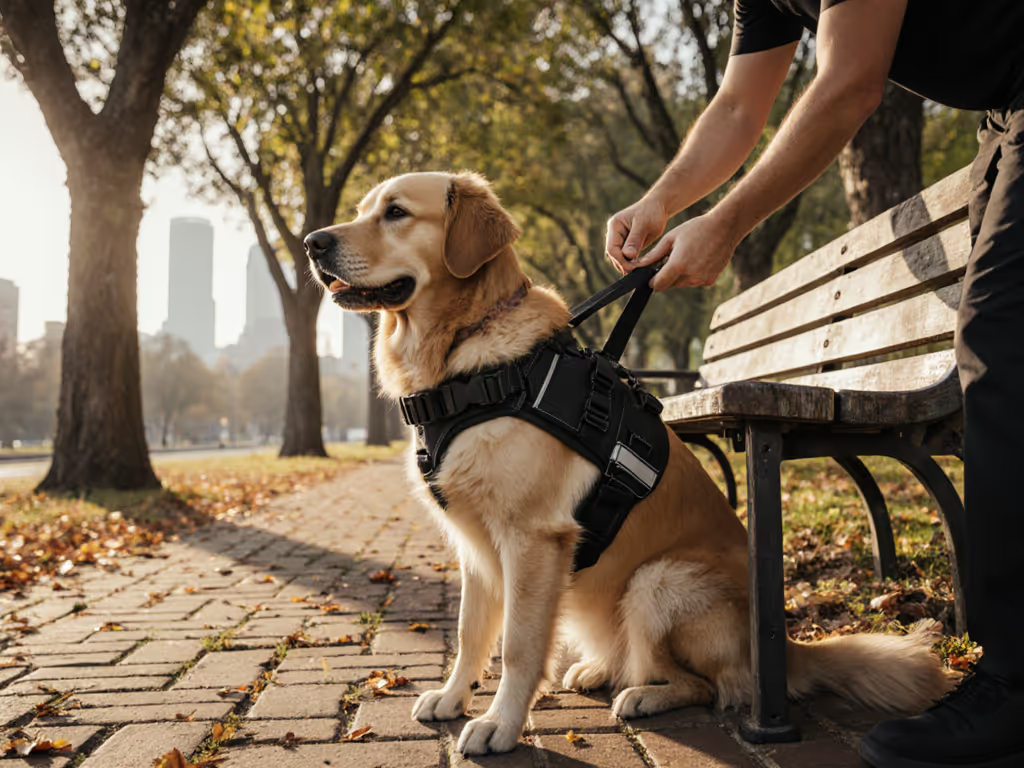
The authors of the retractable-leash clinical letter advise choosing leash type with the animal's size, weight, and force in mind. That advice is not coupler-specific and is not a validated selection standard. For a separate discussion of attachment and pulling considerations, see this front-clip versus back-clip harness fit guide. No validated harness or collar measurements, attachment-point rules, or breed-fit variants for every dog are provided here. Avoid one-size-fits-all claims (especially for growing dogs or dogs with unusual proportions).
The available product details and trainer recommendation do not establish a coupler as a fix for pulling, reactivity, or over-arousal. If the pair cannot keep their attention organized enough for a shared walk, separate practice may be the more workable next step.
What should I look for before choosing one?
Rather than searching for the "best" double lead, compare the exact model's disclosed configuration and care requirements. Ask the seller or manufacturer these plain questions:
- What is the total length, and how is that length divided between the two dogs?
- Is there a central ring or another connection point?
- Is the handle fixed or detachable?
- Does the maker state any limitation about uneven pulling?
- What hardware-care instructions apply to this specific model?
- Is the material described as chew resistant, or does the maker explicitly say it is not chew proof?
For the Evergreen example, the manufacturer instructs owners to occasionally check Chicago-screw hardware and tighten a loose screw before the next use. It also states that its BioThane material is not chew proof. Those are product-specific instructions, not proof of durability or safety for every coupler on the market.
How should I train before walking two dogs on one leash?
Robert Cabral recommends initially separating dogs for training so each can refocus on the handler. That recommendation does not establish that a dual dog training leash must be a later-stage setup, nor does it define a universal sequence for beginning shared walks.
The available information does not provide a universal shared-walk training protocol. If you already use such a setup, you might keep a personal log rather than relying on a vague sense that the outing went "pretty well":
| Fit and handling checkpoint | What to record |
|---|---|
| Individual attention | Did each dog reorient to you when you asked? |
| Shared movement | Did the pair remain manageable when their interests diverged? |
| Line management | Did crossing or circling create a problem you could not promptly resolve? |
| Comfort in motion | Did either dog's normal stride look compromised by the setup? |
| Equipment condition | Did the model's maker specify a care action that is now due? |
This is not a universal protocol; it is a way to make multi-dog leash handling tips observable. When the goal is helping each dog refocus on the handler, Cabral's recommendation is to separate them for training.
Can I connect two ordinary dog leashes together?
The Evergreen example documents one purpose-built arrangement: a central O-ring and a detachable 12-inch single-loop handle. Those details describe that product; they are not instructions for joining two ordinary leashes.
Consult the maker's instructions for the equipment you own. For a separate discussion of leash clips and accidental detachment, review this back-clip harness and leash safety clip guide.
What about dual retractable leashes?
There is no basis here to name a best dual retractable leash or to compare models. There is, however, a reason to be cautious about retractable-leash hardware generally; this retractable versus standard leash safety comparison provides broader context, while a published clinical case report described serious eye trauma after a dog pulled forcefully, a collar ring broke, and a metal clip recoiled into the walker's eye. That single case does not measure an injury rate and did not evaluate double-dog couplers.
The authors of that clinical letter advised selecting leash type with the animal's size, weight, and force in mind. For a two-dog setup, that is a prompt to slow down and evaluate the exact equipment and pair rather than treating extra mechanics as extra control.
Summary and final verdict
A double dog leash coupler is a legitimate product format for two dogs, and it may reduce the clutter of holding two separate handles. It should not be sold to yourself as a guaranteed tangle-free solution. The information available here also does not establish that it suits every pair of dogs or addresses pulling, reactivity, or over-arousal.
Final verdict: Consider Cabral's recommendation to initially separate the dogs for training so each can refocus on the handler, read the exact model's construction and care instructions, and judge the arrangement while the dogs are moving in the real environments you actually use. Keep the focus on the walk itself rather than treating the coupler as the answer.
Related Articles