Safe Tug Games for Dogs: Bite Tug Training Made Simple
By Sofia Martínez • 6th Sep
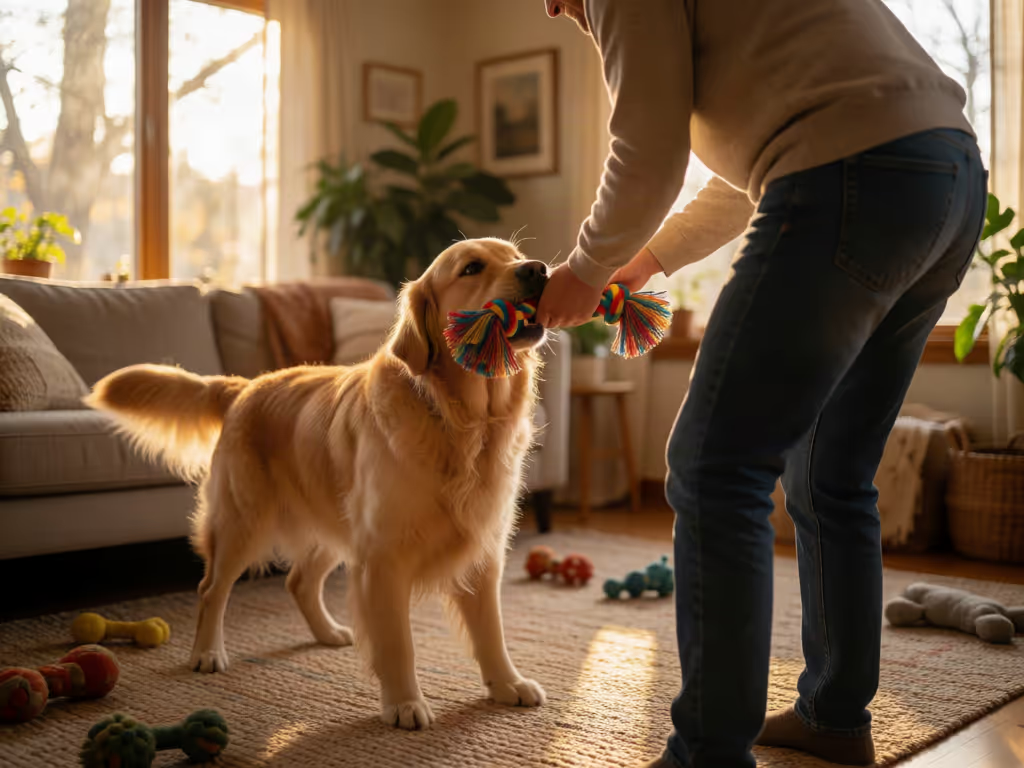
What to do first
This introductory bite-tug routine uses a short, supervised game with a toy.
- First action: Choose a long enough, appropriately sized toy without loose parts, then try two or three brief exchanges of about 10–15 seconds each. Pause for the trained “drop” or “out” cue and put the toy away afterward.
- Likely explanation: Tug can provide activity, stimulation, bonding, and impulse-control practice when managed well, but it is not motivating for every dog.
- Stop or escalate when: Stop for suspected pain, physical limitation, damaged toys, or swallowed fibers. A dog with genuine aggression or a bite history needs veterinary assessment and qualified behavior support—not a basic tug routine. This routine is not a treatment plan for resource guarding.
Important: Avoid lifting, forceful jerking, twisting, or motions that take the dog’s feet off the floor, especially with puppies, seniors, or dogs that may be uncomfortable.
Dog bite tug training can sound more intense than it needs to be. In this guide, tug means a brief, supervised interactive game with a toy for ordinary pet dogs.
If tug feels exciting but a little intimidating in your household, that makes sense. You may be trying to prevent teeth-on-hands moments, protect a puppy's growing body, or make sure everyone uses the same calm routine. The answer is not to ban a game your dog enjoys. It is to keep the setup simple: a suitable toy, brief exchanges, controlled handling, and a practiced release cue.
Small wins, stacked safely, build calm, confident teams.
The problem: tug can feel like a big, high-energy game
Tug is often presented in extremes: either as a wonderful reward or as something that will supposedly spoil a dog. Neither framing helps a guardian standing in the living room with a wiggly dog and a toy in hand.
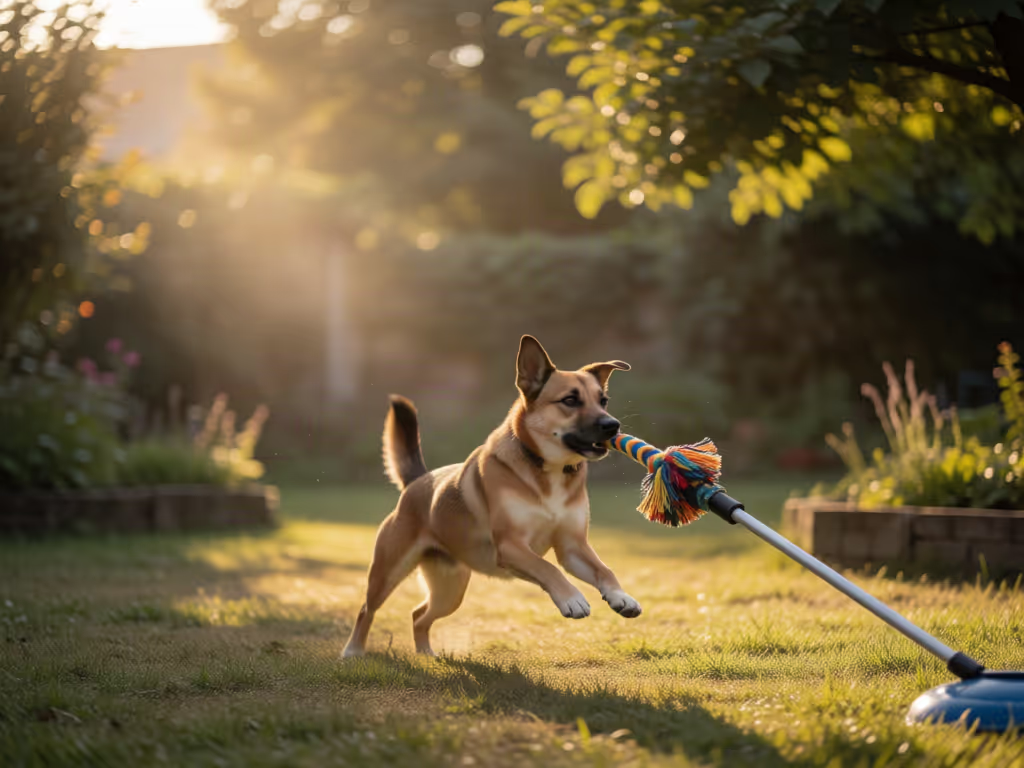
Appropriately managed tug can offer physical activity, mental stimulation, confidence-building, bonding, and opportunities for bite tug impulse control. For another safety-first way to channel chase drive and practice releases, see our flirt pole training guide. The key word is can. Tug is not motivating for every dog, and another toy, food, or praise may be a better reward for some dogs.
For a time-constrained household, the real challenge is practical: how do you make play clear enough that it remains manageable? Start with a tiny routine everyone can remember. Short reps, long gains.
Why "more excitement" is not the goal
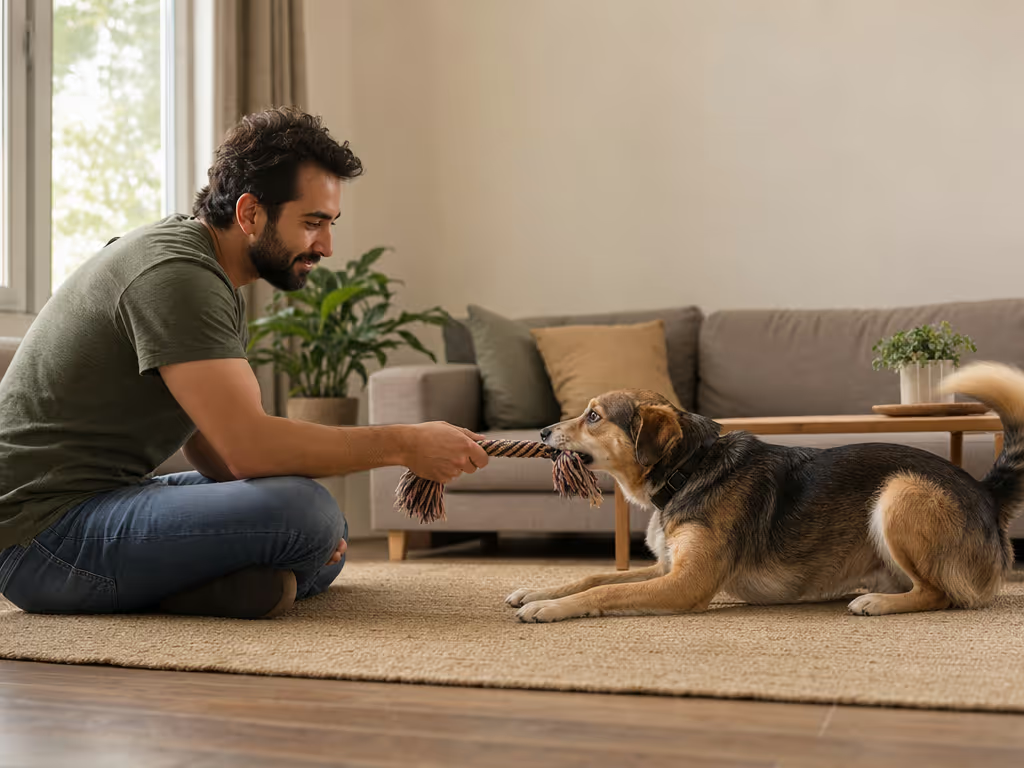
The most common tug mistake is treating the game like a contest. Strong pulling, fast side-to-side movements, and lifting the toy upward can put the dog in an awkward position. Guidance quoted by the AKC recommends keeping the dog's spine in neutral alignment and avoiding motions that lift the dog's feet or twist or contort the neck.
This matters especially for young puppies, senior dogs with possible physical issues, and any dog you suspect may be uncomfortable; our canine fitness basics guide offers additional guidance on safe exercise across life stages. The same guidance recommends light resistance for young puppies and senior dogs that may have physical issues.
There is also a household-management issue. If one person offers hands close to the bite area, another lets the dog keep the toy indefinitely, and a third tries to pull the toy away, the game may not be clear from one turn to the next. Reduce decision load: use one toy, one release word, and one calm finish.
Keep this boundary firm
This article is for ordinary pet-dog tug and limited introductory bite-tug play. It is not a plan for resource guarding, aggression, or a dog that has bitten a person. Aggression and a bite history warrant veterinary assessment and support from a qualified behavior professional rather than an attempt to solve the issue with tug games.
The solution: a three-stage tug routine
Think of this as a home-to-street style progression: first make the pattern easy in a quiet room, then keep it consistent wherever your dog plays. As you move into busier spaces, our distraction training guide can help you build focus systematically instead of adding difficulty all at once. Do not rush ahead because the dog had one enthusiastic session. Repeat the stage that feels smooth.
Stage 1: Set up the toy and your body position
Choose family dog tug equipment based on risk reduction, not marketing promises. This guide does not identify any tug toy as indestructible or universally safe. Instead, use these practical checks:
- Choose a tug with enough length that a dog adjusting their grip is less likely to catch your hand by mistake.
- Select a size the dog cannot fit entirely into their mouth; a toy that fits completely in the mouth can be swallowed.
- Avoid toys with small parts that can detach.
- If you use a rope tug, supervise closely and remove it when fibers are being swallowed or it becomes worn. Swallowed rope fibers can create dangerous intestinal injuries.
- Match the toy's durability to your individual dog's chewing style, supervise play, and replace worn toys.
For your posture, stand balanced with relaxed shoulders. Hold the tug in a way that allows gentle, steady resistance. Do not yank upward, whip side to side, or pull so the dog's feet leave the floor. You do not need dramatic movement to make the game worthwhile.
Stage gate: Continue when you can hold the toy without your hands drifting close to the dog's mouth and without forceful pulling.
Stage 2: Keep each exchange genuinely short
An AKC-quoted trainer suggests relatively short tug bouts of 10 to 15 seconds. That small window is useful because it gives you a natural point to pause rather than letting the game run on by default.
Try this simple format:
- Invite the dog to take the toy.
- Offer light, controlled resistance for one brief exchange.
- Pause and use the release cue your dog has been trained to understand (such as "drop" or "out").
- After the release, take a breath and reset your own posture before the next exchange.
Include a trained release behavior during tug. This piece does not cover teaching that cue from scratch.
Stage gate: You are ready for the next stage when the game includes brief pauses and you can end the interaction by putting the toy away rather than continuing to pull.
Stage 3: End with a thinking moment
A helpful example session is two or three short tug exchanges, followed by a thinking exercise, a treat, and putting the tug away. Keep the thinking exercise simple; this is a transition, not a new challenge.
This suggested sequence offers a modest, repeatable finish rather than a long session.
Put the tug away after the final exchange. This keeps it as an interactive tug reward training tool rather than an item left out for unsupervised chewing.
A 90-second household checklist
Before offering tug, ask:
- Toy: Is it appropriately sized, supervised, and free of obvious wear or loose pieces?
- Body: Can I offer controlled resistance without lifting or twisting my dog?
- Time: Can I keep this to a few very brief exchanges?
- Cue: Am I prepared to use the release word the household has chosen?
- Finish: What thinking activity will follow before I put the toy away?
If the answer to one of these is "not today," choose another reward, food, praise, or a different toy. Not every dog values tug, and declining it is useful information, not a training failure.
When to stop and reassess
Stop the game if you are concerned your dog may be in pain or has a physical limitation. Neck and spine concerns may not always be obvious in dogs doing high-impact activity, so veterinary guidance is appropriate when you have concerns.
Also retire toys that are worn, breakable, or shedding material. For cleaning, storage, inspection, and replacement practices across training tools, see our dog training equipment care guide. A tug session is supervised interaction, not an invitation for a dog to consume pieces of the toy afterward.
FAQ: quick, grounded answers
Are tugging games good for dogs?
When managed appropriately, tug can provide activity, mental stimulation, bonding, confidence-building, and impulse-control practice. It is not a guaranteed benefit for every dog, and some dogs simply prefer food, praise, or another toy.
How long should I play tug with my dog?
A trainer quoted by the AKC recommends bouts of about 10 to 15 seconds. One example structure is two to three short exchanges, then a thinking exercise, a treat, and putting the tug away.
What makes a tug toy a safer choice?
Look for enough length to protect your hands during re-gripping, a size that cannot be swallowed whole, and no small detachable parts. Supervise use, match durability to your dog's chewing style, and replace worn toys. This guide does not identify a chew-proof tug toy.
Your next step: run one calm round today
Pick one tug, agree on one release word with everyone in the household, and do two or three short exchanges. Follow with a thinking exercise, a treat, then put the toy away.
That is enough for today. Build from clean, comfortable repetitions, not intensity. Small wins, stacked safely, build calm, confident teams.
Related Articles