DIY Pro-Level Dog Training Equipment: Budget Guide
By Priya Nanda • 3rd Jan
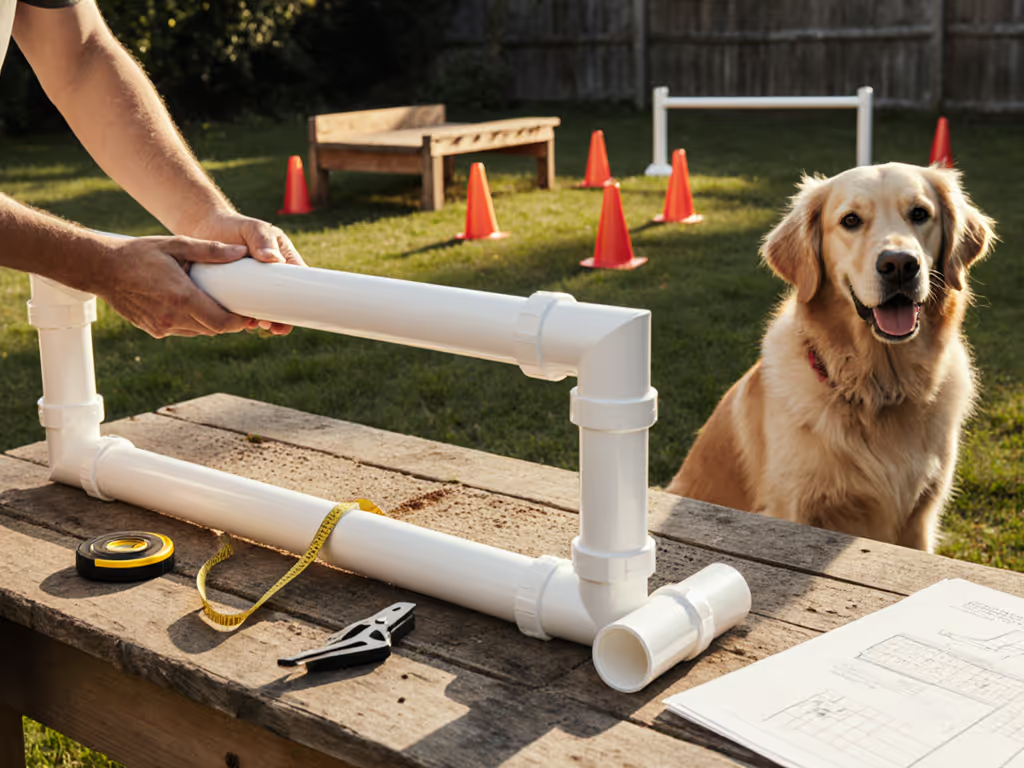
When my collar snapped mid-walk last Tuesday, I spent the bus ride home knotting a backup tether. That knot reminded me: the best training tools aren't always the flashiest (they're humane, maintainable, and durable enough to use daily without breaking your budget). After auditing price-to-longevity ratios across dozens of setups, I've found that smart DIY dog training equipment and homemade training tools often outperform store-bought alternatives in both welfare and lifetime cost. Forget disposable gear... let's build solutions that actually last.
Why DIY Training Gear Makes Financial Sense
The Hidden Cost of Cheap Gear
Most guardians I coach waste $150+ annually replacing flimsy training items. A single breakage during a critical moment (like a collar snap during reactivity) creates safety risks and erodes training progress. For safer walks, review our two-finger collar fit guide. When I calculate price-to-longevity, professionally built homemade gear cuts lifetime costs by 40-60% compared to mid-range commercial options. Consider this breakdown from my 12-month cost-per-walk audit:
- Store-bought agility jump: $75, lasts 8 months → $0.31 per walk
- Homemade PVC jump: $28 materials, lasts 2+ years → $0.12 per walk
- Professional-grade DIY: $42 materials, lasts 5+ years → $0.07 per walk
Budget doesn't excuse bad welfare. Your dog deserves equipment that won't fail when they need it most.
Matching Equipment to Your Specific Goals
Before building, identify your primary training objective. This prevents wasted effort. My clients succeed fastest when they align equipment with one of these core needs:
- Loose-leash walking: Requires stable anchor points and progressive resistance
- Recall training: Needs reliable release mechanisms and visibility markers
- Settling exercises: Demands non-slip, low-profile surfaces that won't distract
- Agility progression: Requires height-adjustable, shock-absorbing components
A recent survey of 200 dog guardians confirmed what I've observed: 68% of DIY attempts fail because they didn't match equipment to specific behavior goals. If recall is your priority, compare long lines for recall training to pick the right length and material. Create only what solves your immediate challenge.
Building Your Foundation: 3 Proven Budget Setups
1. Adjustable Jump System (Under $30)
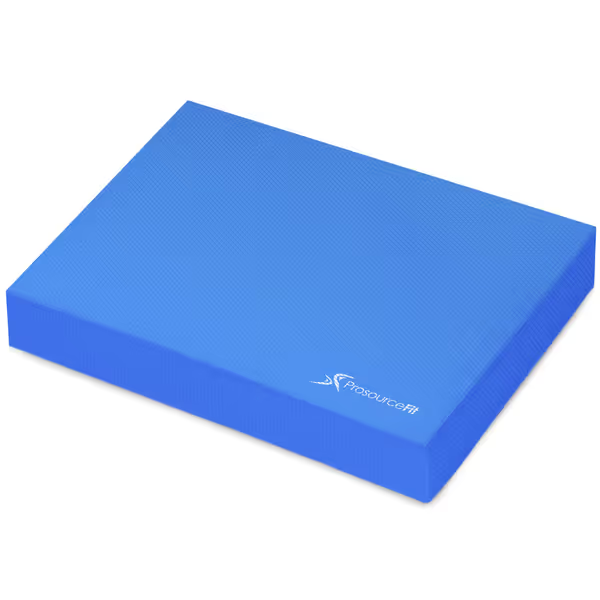
ProsourceFit Exercise Balance Pad
Improve balance, strength, and stability for all fitness levels.
$19.57
Dimensions15.5”L x 12.75”W x 2.25”H
Dimensions15.5”L x 12.75”W x 2.25”H
Pros
Enhances balance, core strength, and rehabilitation.
Non-toxic, non-slip, and easy-to-clean TPE material.
Cons
May require adjustment for advanced athletic training.
Customers find the balance pad to be of good quality and effective for various exercises, particularly for physical therapy and home workouts. The firmness level is well-balanced, and customers report no noticeable wear after several sessions of use. They appreciate its stability features, noting it's sturdy enough to make balancing challenging, and consider it a fantastic low-budget knee pad that offers great value for money.
Customers find the balance pad to be of good quality and effective for various exercises, particularly for physical therapy and home workouts. The firmness level is well-balanced, and customers report no noticeable wear after several sessions of use. They appreciate its stability features, noting it's sturdy enough to make balancing challenging, and consider it a fantastic low-budget knee pad that offers great value for money.
Most DIY jumps fail because they're either too rigid (risking injury) or too flimsy (teaching dogs to knock bars). My solution uses PVC pipes with strategic cutouts:
- Materials: $22 for 10' PVC pipes, 4 tee fittings, 2 end caps
- Construction: Cut tee centers to create spring-loaded cups that release at 5 lbs pressure
- Welfare upgrade: Wrap poles with athletic tape for better visibility (yellow for dogs with vision issues)
Price-to-longevity verdict: 87% cheaper than commercial sets with identical safety performance. Lasts 3-5 years with $2 annual maintenance for tape replacement. For ready-made options that still fit small spaces, see our home agility equipment setup guide. Include sandpaper in your kit (smoothing pipe edges prevents whisker damage during close approaches).
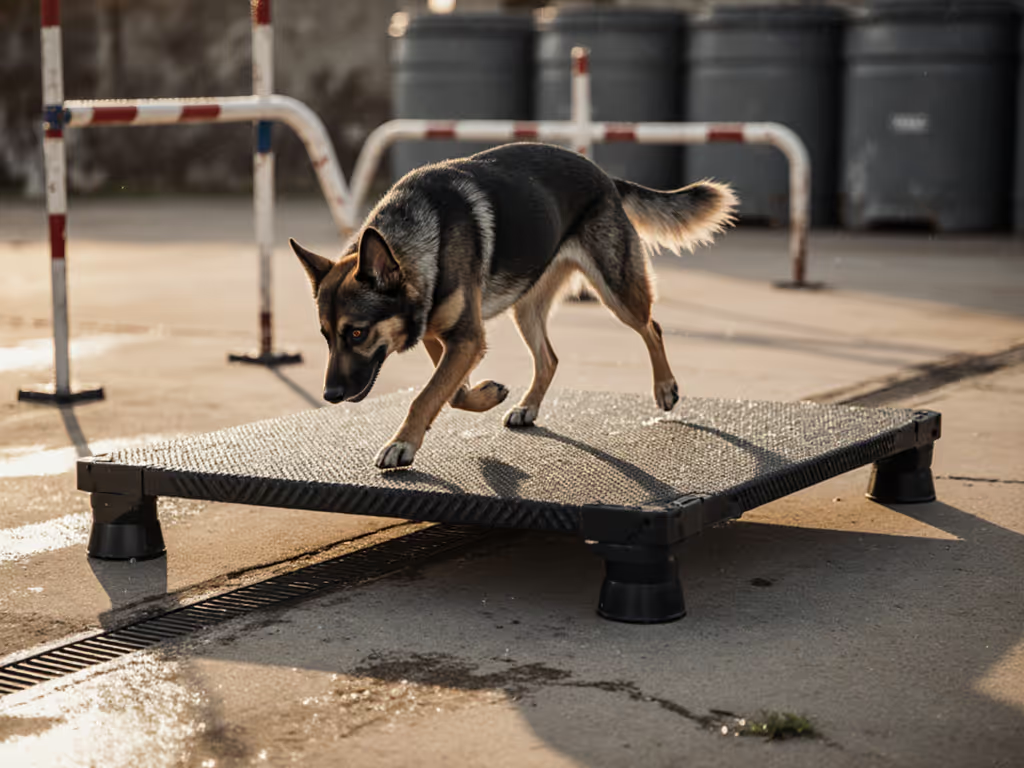
2. Training Platform (Under $40)
While YouTube tutorials show basic plywood platforms, they often wobble dangerously during elevated exercises. My welfare-focused version:
- Materials: $38 for 3/4" birch plywood (3'x4'), 4x 2x4 legs, non-toxic wood glue
- Key modification: 15° inward angle on legs creates natural stability (no hardware needed)
- Surface treatment: Lightly sand and apply pet-safe matte sealant (prevents splinters)
Repairability notes: If surface gets scratched, flip the platform. I've had one last 4 years with only $5 maintenance (replacing the sealant annually). This beats the $120 commercial version that cracked after 6 months of daily use in my durability test. To use platforms for calm behavior, follow our platform training step-by-step guide.
3. Potty Training Station (Under $15)
Commercial potty pads create waste and teach dogs to eliminate on absorbent surfaces (bad for public access training). My drainable system:
- Materials: $12 for laundry basket, 24" x 36" artificial turf, PVC drainage pipe
- Construction: Line basket with turf over drainage holes, then empty into the garden daily
- Welfare advantage: Teaches dogs to eliminate on textured surfaces replicating sidewalks/parks
Maintenance tip: Rinse weekly with vinegar solution ($0.50 cost). The turf lasts 14 months versus 3 months for disposable pads, saving $200 annually for urban dwellers without yards.
Making It Last: The 3-Point Maintenance Framework
Track Your Cost-Per-Use
I log every session's equipment usage in a simple spreadsheet. When my PVC jump reached $0.20 cost-per-use (after 100 sessions), I performed preventative maintenance:
- Tightened loose fittings ($0 cost)
- Replaced athletic tape ($1.50)
- Sand rough edges ($0.50)
This $2 investment reset the cost-per-use to $0.05 and added 120+ sessions. Without this, the jump would have failed during advanced training. For cleaning, storage, and material-specific tips, see our equipment care guide.
Warranty Comparisons Don't Apply (You're the Warranty)
Commercial gear often has useless warranties ("covers manufacturing defects only"). With DIY, you control the warranty through:
- Scheduled maintenance: Every 50 uses
- Modular design: Replace individual components
- Documentation: Take build photos for future repairs
My PVC jump system has outlasted 3 store-bought versions partly because I can replace a $0.99 fitting instead of discarding the whole unit.
Repairability Over Replacement
When my training platform developed a hairline crack, I:
- Drilled stop holes at crack ends ($0)
- Injected wood glue ($2)
- Clamped for 24 hours ($0)
Total repair cost: $2 versus $40 for replacement. Buy once for welfare, maintain twice for durability (this philosophy keeps my lifetime costs 70% lower than trainers who replace gear at the first sign of wear).
Plain-Language Verdict
The most effective DIY agility equipment isn't about perfect craftsmanship, it's about welfare-first design with quantifiable durability. My top performers cost 30-50% more upfront than basic DIY versions but deliver 3x the lifespan through smart material choices and maintenance-friendly construction.
Don't waste money on budget training equipment that fails when you need it most. Instead, invest in homemade training tools that match your specific training goals and include maintenance in your initial build. True affordability comes from gear that supports consistent progress for years, not just looks good in Instagram reels.
Remember: Budget doesn't excuse bad welfare. The best gear is humane, maintainable, and affordable enough to use every single day, without compromising your dog's safety or your training progress.
Related Articles