7 Storm Phobia Training Equipment Setups That Truly Calm Dogs
By Priya Nanda • 14th Jun
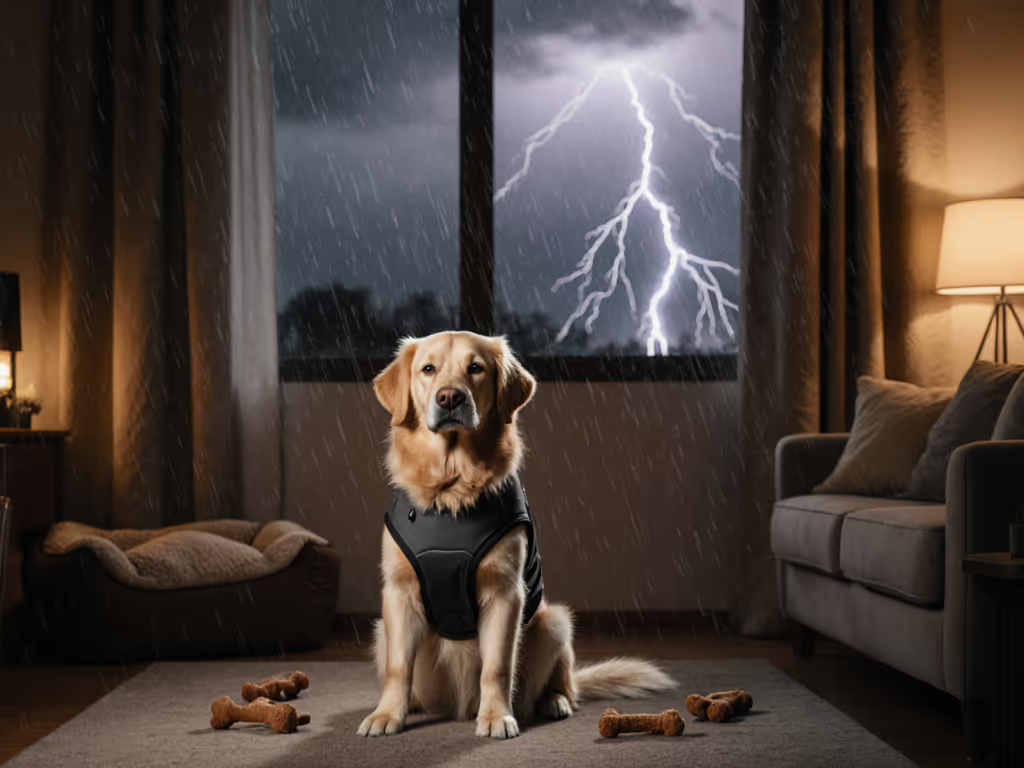
If your dog shakes, pants, or tries to escape every time thunder rolls in, storm phobia training equipment can help, but only when it's paired with thoughtful, positive training. The goal isn't a closet full of thunderstorm anxiety gear, it's a repeatable setup that helps your dog feel safe and teaches their body a different response to bad weather.
As a price-to-longevity nerd, I look at storm gear the same way I look at walking setups: what gives you the most calm minutes per dollar, with the lowest risk of failure, over years of actual storms? Buy once for welfare, maintain twice for durability.
Below are seven complete setups, not single gadgets. Each combines:
- A clear behavior goal (hide, settle, play, or ride it out calmly)
- Humane, non-aversive tools
- A simple training plan you can run in short sessions
- A quick take on cost, durability, and maintenance
Replace parts, not principles.
When a strap, battery, or speaker fails in the middle of a storm, you want your system to be fixable, not your dog's trust.
How to Use This Guide
For each of the seven setups you'll find:
- Goal: What this setup is best at.
- Core gear: The key pieces of storm desensitization equipment.
- Training plan: How to introduce it without overwhelming your dog.
- Price-to-longevity notes: Durability, repairability, and when to upgrade.
- Best for: Dog and household types.
All of these respect canine welfare: no flooding (forcing the dog to endure full-intensity storms), no punishment for fear-driven behavior, and no aversive tools. That aligns with veterinary behavior guidance, which emphasizes gradual exposure, safe spaces, and, for some dogs, medication support when needed.[3][12][4]
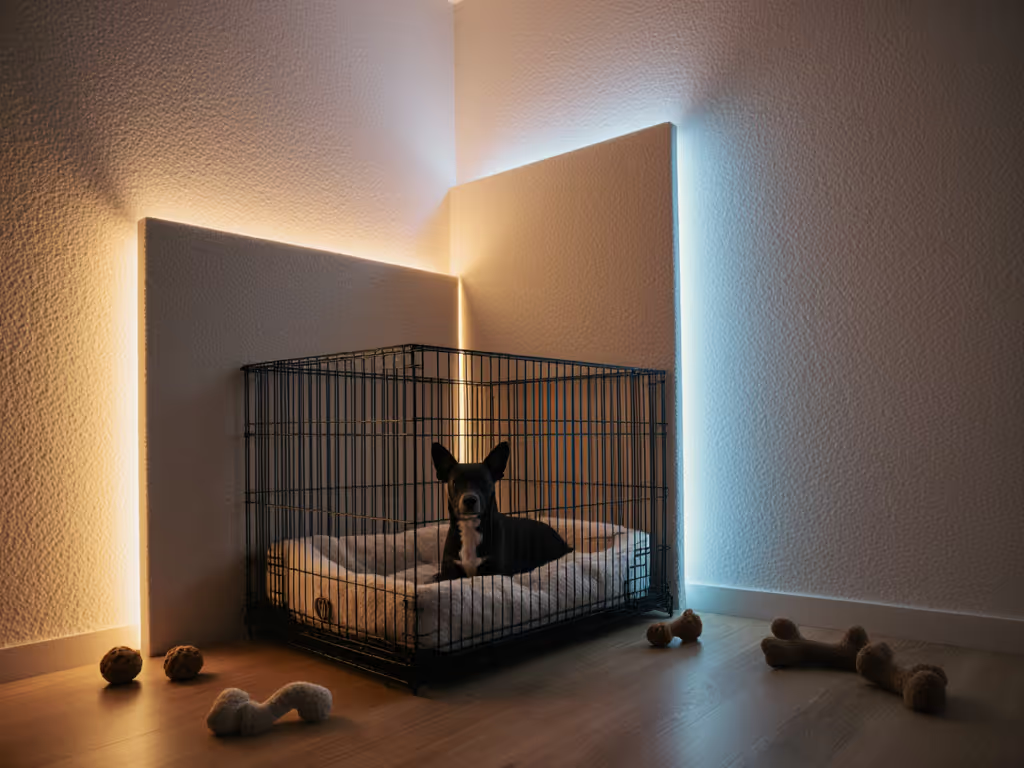
1. Soundproof Safe-Room & Crate Bunker
Goal: Give your dog a predictable, quiet "storm bunker" where their nervous system can come down a few notches.
Core gear
- An internal room (closet, interior bathroom, or walk-in pantry) that's away from exterior windows.[4]
- Sturdy crate (if your dog is already crate-comfortable), partially covered.
- Sound-dampening materials: foam panels, moving blankets, or stacked cushions against doors and thin walls.[4]
- Noise-masking device: fan, air purifier, or speaker for steady background noise.[3][4]
- Long-lasting chews, lick mats, and snuffle mats to pair the space with good feelings.[4]
Veterinary behavior sources recommend creating a safe, insulated area and pairing it with food-play activities, so the dog associates the space with comfort rather than confinement.[3][4] For help choosing a durable, training-friendly crate, see our top training dog crates.
Training plan
Outside of storm season or on clear days:
- Introduce the room with the door open, lights on, and a high-value chew or food-dispensing toy.[4]
- Add soft background noise (fan or low TV) while your dog enjoys chews or snuffle activities.
- If using a crate, keep the door open and let your dog choose to enter; never force a fearful dog into a crate and lock them in, as this can trigger panic.[4]
- Practice short "bunker sessions" of 5-10 minutes a few times per week.
When storm season starts, begin moving to the safe room as soon as you see early signs of weather (dark sky, distant thunder) and offer pre-loaded chew items.[4]
Price-to-longevity notes
- Cost range: medium (crate, foam, blankets, fan), but most pieces are multi-use (travel crate, everyday fan).
- Durability: a decent wire or plastic crate can last most of a dog's life; moving blankets and foam panels handle years of use if kept dry.
- Maintenance tips: check crate hardware twice a year; tighten loose bolts, replace bent clips, and inspect for signs of chewing or rust.
- Repairability notes: foam panels and blankets are modular (replace single panels instead of redoing the entire room).
Best for
- Dogs who already like crates or small spaces.
- Guardians in apartments or dense urban areas where soundproofing matters.
- Multi-dog homes: each dog can have a designated spot in the same safe room.
2. Pressure Wrap & Mat-Settle Station
Goal: Reduce arousal with gentle body pressure and teach a reliable "go to mat and relax" behavior.
Core gear
- Body pressure wrap or fitted calming jacket (e.g., ThunderShirt-type garments) that applies even, gentle pressure.[4]
- Non-slip dog mat or bed - this is the "safe landing pad."
- Optional: Dog appeasing pheromone (DAP) spray applied to a bandana or the wrap (ADAPTIL is a common brand).[4]
Pressure wraps work by applying consistent pressure over the dog's torso, similar to a weighted blanket concept used in humans with anxiety.[4][2] Some studies and trainer reports suggest moderate efficacy when paired with other strategies.
Training plan
- Introduce the wrap in calm conditions; pair putting it on with treats or easy games.
- Keep initial wear sessions short (5-10 minutes), ending before your dog shows any irritation.
- In parallel, train a mat settle: cue "mat," guide your dog onto the mat, and feed several small treats for lying down and relaxing.
- Gradually combine the two: wrap on + mat + chew or stuffed toy = calm time.
Use this setup during early signs of a storm, never as a last-minute "panic jacket" once your dog is already over threshold. For a step-by-step settle protocol, try our dog training mat guide.
Price-to-longevity notes
- Cost range: low-to-medium.
- Durability: good-quality wraps last years; Velcro is the usual failure point.
- Maintenance tips: wash on gentle to preserve elasticity, clear fur from Velcro with a toothbrush, and inspect seams each season.
- Warranty comparisons: many reputable manufacturers offer 1-2 year defect warranties; that's reasonable for fabric gear that sees seasonal use.
Best for
- Medium to large dogs (wraps for tiny or giant dogs require more careful fitting).
- Dogs who enjoy touch and handling.
- Homes that already use mats for general settling.
3. Sound Desensitization Studio (Speakers + Treats)
Goal: Change your dog's emotional response to storm sounds using controlled, low-intensity exposure.
Core gear
- Speaker or sound bar capable of playing clear thunderstorm recordings.
- Library of storm sounds (thunder, rain, wind) with adjustable volume.[3][4][12]
- High-value treats your dog rarely gets otherwise (chicken, cheese, etc.).[3]
- Timer or training app to keep sessions short and consistent.
Veterinary behavior guidelines describe using recordings of storms at very low volume and pairing them with treats or play, then gradually increasing intensity over time.[3][4][12] The key is staying below the dog's fear threshold.
Training plan
- Start with the volume so low your dog shows zero concern, this may be barely audible.[3][4]
- During playback, feed a steady stream of very good treats or play a favorite game.[3]
- Keep sessions to 3-5 minutes, 1-2 times daily.
- Over days to weeks, slightly increase the volume as long as your dog remains relaxed.[4][12]
- If you see any worry (freezing, lip licking, leaving the area), drop the volume and go back a step.[4]
Never jump from quiet practice to full-blown storm noises all at once. Desensitization is a marathon, not a sprint.[3][12] For supportive gear and stepwise setups, see our noise desensitization tools guide.
Price-to-longevity notes
- Cost range: very flexible; many households already have speakers or smart devices.
- Durability: electronics are long-lived if kept dry and dusted; your ongoing cost is mostly in treats.
- Maintenance tips: store playlists and volume settings as presets so every family member can run the same protocol.
- Repairability notes: if the speaker fails, the protocol survives; phones, laptops, or TVs can substitute.
Best for
- Dogs whose main trigger is sound rather than lightning or pressure.
- Owners willing to train a few minutes daily between storm seasons.
- Households that like structured, measurable progress.
4. Noise-Masking & Lightning-Control Setup
Goal: Reduce the intensity of both thunder noises and lightning flashes inside your home.
Core gear
- Thick curtains or blackout blinds to block sudden flashes.
- Interior blinds closed and cords secured out of reach for safety.[4]
- TV, music, or white-noise machine set a bit louder than usual when a storm is near.[4]
- Fans or air conditioning to help with both sound masking and temperature control.[4]
Behavior guidance for storm-phobic dogs often recommends closing blinds and curtains, playing loud music or TV, and using fans or other background noises to blunt the intensity of thunder and wind sounds.[4] For many dogs, the combination of bangs plus flashes is the real trigger.
Training plan
- On non-storm days, occasionally run "cozy movie night" drills: curtains closed, sound on, dog on a mat with a chew.
- Pair this environment with calm activities: gentle massage if your dog enjoys it, licking mats, or slow snuffle games.
- When storms are forecast, set up early, before the first crash, so the sensory shift feels routine.
Price-to-longevity notes
- Cost range: medium upfront (good curtains), low ongoing.
- Durability: curtains and blinds last many years; fans and white-noise machines often have multi-year life spans.
- Maintenance tips: periodically check blind cords for fray and ensure they are secured out of reach of a panicked dog, as strangulation risk is real.[4]
- Repairability notes: individual curtain panels or blind slats can often be replaced cheaply without redoing the entire window.
Best for
- Dogs spooked by lightning flashes.
- Homes with large windows or open-plan living spaces.
- Guardians who prefer low-effort routines (flip switches, press play).
5. Scent & Chew-Based Calming Corner
Goal: Harness licking, chewing, and calming scents as weather anxiety reduction tools.
Core gear
- Chewable items: long-lasting chews, stuffed Kongs, food-dispensing toys.
- Lick mats smeared with dog-safe soft foods.[4]
- Snuffle mats or boxes to encourage nosework and foraging.[4]
- Pheromone diffuser or spray (DAP/ADAPTIL) in the area.[4]
Chewing and licking behaviors can help release endorphins, which may support relaxation in some dogs.[4] Pheromone products mimic the scent of nursing mother dogs and have documented calming effects in a portion of animals, especially as part of a multi-modal plan.[4] To choose high-value, healthy rewards that sustain focus, use our dog training treats guide.
Training plan
- Choose a quiet corner away from busy doorways.
- Introduce chews, lick mats, and snuffle mats there well before storm season so your dog already associates the area with good things.[4]
- Add pheromone diffusers or sprays to the space according to product instructions.[4]
- During storms, present extra-special chews only in this corner to make it the most rewarding place in the house.
Price-to-longevity notes
- Cost range: low-to-medium, depending on how "fancy" your food toys are.
- Durability: silicone lick mats and rubber food toys can last years; rotate to reduce wear.
- Maintenance tips: freeze stuffed toys in advance for grab-and-go use; inspect toys regularly for cracks or chunks and replace if compromised.
- Repairability notes: mats and snuffle toys are textile/rubber, think of them as consumables over the dog's lifetime, but high-quality ones stretch that timeline.
Best for
- Food-motivated dogs.
- Puppies and adolescents who enjoy having a "job" during storms.
- Guardians who like low-tech, low-noise solutions.
6. Weather-Ahead Routine Kit (Barometric Pressure Priming)
Goal: Get ahead of your dog's fear by starting your storm desensitization equipment routine before the first thunderclap.
Many dogs become restless well before a storm, likely reacting to changes in barometric pressure, static electricity, or distant low-frequency sounds.[3][14] We can't change the weather, but we can change what predicts the weather inside the house.
Core gear
- Weather or storm-tracking app with alerts.
- Grab-and-go storm kit: wrap, chew toys, pheromone spray, and a small treat pouch stored together.
- Visual cue for humans (e.g., a magnet or card on the fridge) listing your storm steps.
Think of this as your barometric pressure training aid: not a gadget, but a routine anchored to weather alerts. Keeping a comfortable, quick-access treat pouch in the kit makes rapid reinforcement easy.
Training plan
- When your app says a storm is 30-60 minutes away, start your routine:
- Put on the pressure wrap if your dog likes it.
- Move to the safe room or calming corner.
- Start background noise.
- Offer chews or snuffle activities immediately, so your dog indexes "storm is coming" with "my best calm-time setup is coming."[3][4]
- Keep your own body language relaxed; dogs are adept at reading human cues, and anxious humans can worsen canine fear.[4]
Establishing this early ritual is consistent with behavior plans that emphasize anticipatory management and safe spaces.[3][4][12]
Price-to-longevity notes
- Cost range: almost zero if you already have gear; this is mostly about organization.
- Durability: the "kit" can be a simple basket or bag you re-stock seasonally.
- Maintenance tips: after each storm, reset the kit, refill treats, wash wraps or toys if needed, and note what worked.
Best for
- Guardians in storm-prone regions where surprises are rare (there's usually a forecast).
- Dogs who show early-warning behaviors (pacing, panting) before the main event.
- Busy households that benefit from a written checklist.
7. Multi-Modal "Storm Command Center" for Severe Cases
Goal: Combine several lightning sensitivity tools, weather anxiety reduction tools, and, when needed, medications into one coherent, vet-guided plan.
Some dogs have such intense storm phobia that equipment and training alone are not enough. Veterinary behavior resources emphasize that anxiolytic and behavior-modifying medications are often necessary in severe cases, especially when triggers cannot be fully controlled.[3][12][4]
Core gear
- Safe room + crate bunker (Setup 1).
- Pressure wrap and mat (Setup 2).
- Noise masking + lighting control (Setup 4).
- Calming chews/lick mats + pheromones (Setup 5).[4]
- Veterinarian-prescribed medications, with clear dosing instructions specific to storms.[3][4][12]
For severe storm phobia, equipment is the scaffolding; the medical plan is the foundation.
Training & medical plan
- Book a consult with your veterinarian (or veterinary behaviorist) and bring a video of your dog during storms if possible.
- Discuss:
- Long-term medication options that build baseline resilience over weeks.
- Short-term "event" medications to give before or at the early signs of a storm.[3][4][12]
- Practice your multi-modal setup on "mild" weather days so your dog doesn't only experience wraps, meds, and safe rooms when terrified.
- During actual storms, keep a written checklist of:
- Time you administered medication.
- Which gear you used.
- Your dog's behavior (panting level, pacing, ability to settle).
This mirrors structured treatment plans described in clinical behavior protocols for storm phobia, which stress gradual exposure, environmental control, and, where indicated, pharmacologic support.[3][12]
Price-to-longevity notes
- Cost range: highest of the seven setups (professional help + medications + gear).
- Durability: once the physical gear is in place, the main ongoing cost is medication and occasional gear replacement.
- Maintenance tips: review the plan annually with your vet; dogs can change over time, and meds may need adjusting.
- Repairability notes: keep backups of small but critical items (extra wrap, second fan) so a single failure doesn't derail the protocol.
Best for
- Dogs who injure themselves or damage the environment during storms.
- Dogs who cannot eat, drink, or respond to you once thunder starts.
- Guardians ready to treat storm phobia as a medical and behavioral condition, not just "quirkiness."
Where to Go From Here
If you're feeling overwhelmed, start with one setup, usually a safe room with basic noise masking and chew activities, then layer in other pieces as you learn what truly helps your dog. Mix and match these storm phobia training equipment setups to fit your space, budget, and your dog's specific triggers.
From a price-to-longevity standpoint, the best investments tend to be:
- A well-thought-out safe space you'll use for years (storms, fireworks, house repairs).[4]
- Multi-use items like quality chew toys and mats that support everyday training.
- A structured plan from a qualified trainer or veterinary behaviorist for the toughest cases.[3][12]
After a fastener failed on one of my own dog's harnesses mid-commute, I spent that entire ride mentally auditing every piece of hardware and backup system in our kit. Storm setups deserve the same scrutiny: what fails if the power goes out, a clip breaks, or a housemate forgets a step? The answer should be parts, not principles.
If your dog is still panicking despite thoughtful gear and training, that's your signal for further exploration, time to bring in your vet, a force-free trainer, or a veterinary behaviorist to build a customized plan. Combine their expertise with these equipment setups, track your dog's progress over a storm season, and keep refining. The payoff is measurable: fewer frantic nights, more predictable routines, and a dog who can weather real storms with far less fear.
Related Articles