
Garmin Pro 550 Review: Professional E-Collar System Tested
By Maya Chen • 7th Dec
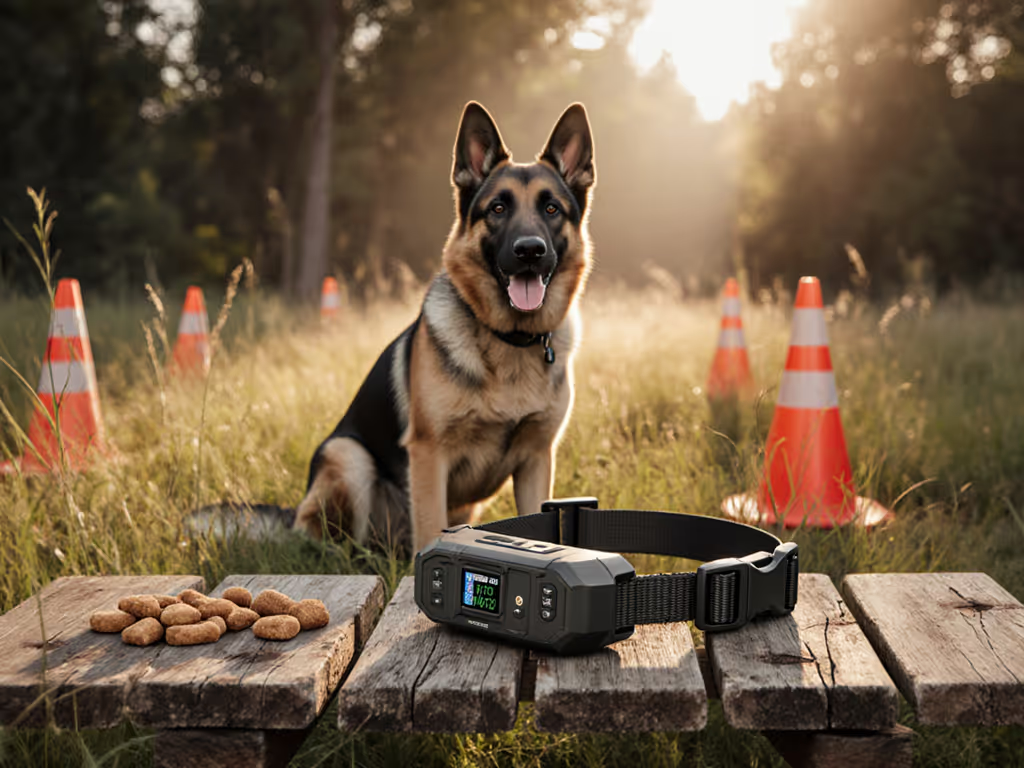
When searching for a Garmin Pro 550 review, many dog guardians land on this page hoping for a miracle solution to off-leash reliability. As someone who's spent years mapping professional e-collar system promises to real-world canine behavior, I need to be transparent from the start: this technology doesn't align with my welfare-first approach to dog training. While the Garmin Pro 550 boasts advanced features like vibration settings and beacon lights, its core function (delivering electrical stimulation) conflicts with my fundamental belief that gear should enable humane training reps your dog can win in real contexts. Let's examine why positive reinforcement methods offer more sustainable solutions for the challenges that lead people to consider these devices.
Understanding the Pull Toward "Quick Fix" Tools
I understand why overwhelmed guardians reach for devices promising immediate results. You've been there, heart pounding as your dog lunges toward another canine on a rainy sidewalk, feeling that familiar shame when neighbors witness the struggle. Maybe you've tried everything: gentle leaders, front-clip harnesses, countless treats. That rainy weeknight when my reactive foster pinned himself behind me at a crosswalk? I knew a flashy gadget couldn't deliver what he needed. What worked wasn't some high-tech solution, but properly fitted gear and three short decompression drills that let him experience success. If you're unsure about fit, use our two-finger collar fit guide to measure and adjust safely.
The marketing around tools like the Garmin Pro 550 preys on these vulnerable moments. They promise:
- Instant compliance through 21 levels of stimulation
- "Professional" control for complex environments
- Off-leash reliability without addressing underlying behavior
Yet evidence shows these approaches often create new problems: increased anxiety, learned helplessness, and damaged human-canine relationships. A study published in Animals (2020) documented significantly higher stress indicators in dogs trained with e-collars compared to positive reinforcement methods. The truth? Reward what you want to see, not what you want to suppress.
Why Professional Trainers Choose Different Paths
Let's be clear: the Garmin Pro 550 functions as an aversive tool, delivering electrical stimulation intended to suppress unwanted behavior. While manufacturers highlight "vibration" and "tone" features as neutral alternatives, these rarely function as marketed in real-world scenarios. The product's primary purpose (21 levels of momentary or continuous stimulation) makes it incompatible with humane, positive reinforcement training principles.
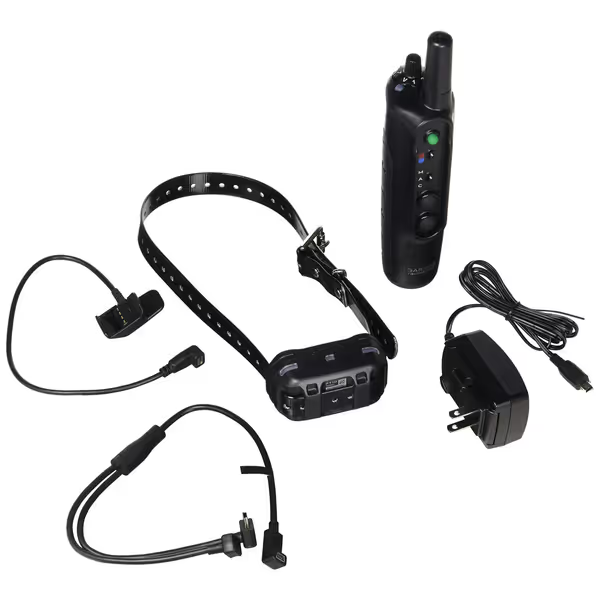
Garmin Pro 550 Dog Training Collar
Reliable, multi-dog e-collar for consistent training across all environments.
$399.99
Range1 Mile
Range1 Mile
Pros
Train up to 3 dogs with individual control (additional devices sold separately).
21 levels of continuous and momentary stimulation + vibration for precise correction.
Cons
Requires additional dog devices for multi-dog training (sold separately).
Customers find this training collar to be the best e-collar on the market, praising its durability and ease of use. They appreciate its fast 2-hour charge time and awesome light features, while one customer notes it works well with large breeds like Dobermans. Customers consider it worth the investment, with one mentioning its effectiveness in training pitbull/husky mix dogs.
Customers find this training collar to be the best e-collar on the market, praising its durability and ease of use. They appreciate its fast 2-hour charge time and awesome light features, while one customer notes it works well with large breeds like Dobermans. Customers consider it worth the investment, with one mentioning its effectiveness in training pitbull/husky mix dogs.
As a positive reinforcement specialist, I've seen how aversive tools create dependencies. Instead of building voluntary behaviors, they manufacture compliance through discomfort, a dangerous foundation for off-leash reliability.
Safety First: Protecting Canine Welfare
Consider these welfare concerns with e-collar systems:
- Tracheal pressure: Even "low" settings create pain pathways that can cause long-term physical damage
- Emotional fallout: Many dogs develop anxiety specifically around training contexts
- Communication breakdown: Dogs often associate pain with environmental triggers (other dogs, wildlife) rather than their own behavior
- False security: "Off-leash reliability" achieved through aversives collapses when the collar isn't worn
A 2022 survey of veterinary behaviorists showed 89% observed increased reactivity in cases where e-collars were improperly used. The advertised "off-leash reliability training" often becomes a myth that puts dogs at greater risk when the collar isn't present.
Practical Limitations in Real Environments
Even setting welfare concerns aside, these systems face practical limitations:
- Signal interference: In urban environments with Wi-Fi networks and cell towers, signal reliability drops significantly
- Battery anxiety: The Pro 550's advertised 60-hour collar runtime assumes minimal stimulation use, a reality that rarely matches field conditions
- Button complexity: Two black buttons controlling multiple functions creates consistency challenges during high-stress moments
- Fit issues: Standard collar straps frequently cause pressure points, especially for barrel-chested breeds or dogs with sensitive necks
I've witnessed experienced handlers accidentally activate high-level stimulation during stressful encounters simply because the button layout encourages muscle memory errors. When your dog's welfare depends on precise timing, these design flaws become critical safety issues.
The Positive Alternative: Building Real Reliability
True off-leash reliability training starts with understanding why dogs behave as they do. Is your dog pulling because they're:
- Overwhelmed by environmental triggers?
- Seeking reinforcement (squirrel! dog! person!)?
- Physically uncomfortable with their equipment?
- Simply unpracticed in making the right choices?
Step 1: Match Gear to Actual Behavior Goals
Goal-to-gear mapping transforms frustration into progress. For leash pulling:
- Problem: Dog pulls toward triggers
- Solution: Freedom-based no-pull harness (Y-front design) that doesn't restrict breathing
- Drill: 5-minute timed practice where leash stays loose = forward movement continues
For recall challenges:
- Problem: Dog ignores calls when distracted
- Solution: Long-line leash (15-30ft) for controlled freedom
- Drill: Time-boxed sessions where "come" = high-value reward before distraction appears

Step 2: Implement Time-Boxed Progression
Create measurable milestones with cue-criteria-reward structure:
| Stage | Criteria | Reward | Time Box |
|---|---|---|---|
| 1 | 3 steps loose leash | Tug toy session | 3 minutes |
| 2 | 10 steps with single distraction | Cheese cube | 4 minutes |
| 3 | Crosswalk with traffic | Play bow invitation | 5 minutes |
This progression builds actual understanding (your dog isn't avoiding pain, but actively choosing behaviors that yield predictable rewards). The result? A dog who chooses to stay close because good things happen, not because discomfort might follow.
Step 3: Address the Root Cause
For reactivity and poor recall, we often need to address underlying issues:
- Insufficient decomposition: Breaking behavior into smaller steps your dog can actually master
- Inconsistent reinforcement: Reward timing that confuses your dog about what's being reinforced
- Environmental mismatch: Practicing advanced skills in environments beyond your dog's current capacity
Start with clear safety notes for each drill:
- "If your dog stares at trigger for >2 seconds, increase distance immediately"
- "Stop session if ears go back or tail tucks"
- "Always end on success, never frustration"
Building Real Off-Leash Reliability
True reliability comes from systematic training, not technological suppression. Here's how to build it without compromising welfare:
For small dog training collar concerns:
- Measure neck circumference with two fingers width
- Choose quick-release buckles that won't tighten unexpectedly
- Opt for padded collars with wide contact surfaces to distribute pressure
For advanced e-collar features alternatives:
- Vibration alternatives: Pair a gentle wrist flick with verbal "check-in" cue during walks
- Beacon light alternatives: Use reflective harnesses with LED tags for visibility
- Bark limiter alternatives: Teach incompatible behaviors like "settle" on a mat

Fit first, then features, always powered by positive reinforcement.
Making Your Training Stick
The most powerful training "tool" isn't electronic, it's your timing. When you notice your dog making a good choice:
- Mark immediately with a consistent sound ("yes!" or clicker)
- Deliver meaningful reinforcement within 1-2 seconds
- Note what worked to repeat it tomorrow
This creates what behavior scientists call "response contagion": your dog actively seeks opportunities to earn rewards because they understand the connection between action and outcome. No electrical stimulation required.
Your Action Plan for Positive Progress
Next time you're tempted by a "professional" solution promising instant results, remember: sustainable behavior change takes shaped repetition, not suppression. Start tomorrow with this time-boxed step:
- Identify one micro-behavior you want more of (e.g., "look at me when stopping")
- Set a 4-minute timer for your walk
- Reward every occurrence with high-value training treats or play
- Stop when timer ends, even if progress seems incomplete
Repeat this for 7 days. I've seen this simple approach transform stressed walks into joyful connections, even with dogs who've failed with multiple aversive tools. Reward what you want to see, not what you want to suppress, and watch your dog willingly choose the behavior you desire.
When your goal is a truly reliable companion (not just compliance through discomfort), you'll find that the most advanced technology is still your relationship, built moment by moment through mutual understanding and respect. That's the only professional system your dog needs.
Related Articles