Best Bungee Tug Toy for Dogs: Shock-Absorbing Training Reward
By Maya Chen • 25th Sep
At a glance
The listing identifies the Dingo Z30003 as a bungee-handle tug and instructs owners to supervise play, but the evidence does not support calling it the best.
- Best overall: Consider it if you want a handled tug and will inspect it, supervise every session, and store it away afterward. The listing claims the bungee handle absorbs strong pulls and reduces unspecified strain, but joint-protection benefits are unverified. View on Amazon
- Best for a distinct use case: The listing presents it for fetch, biting, and motivational use in activities including agility, flyball, and obedience.
- What decides it: Confirm the current material, dimensions, and configuration before buying; the listing conflicts on fur type, length, and whether it includes a squeaker or two pieces.
Important: Avoid handler-induced head shaking or dragging, and use extra caution—or seek qualified guidance—for dogs with neck or cervical-spine concerns.
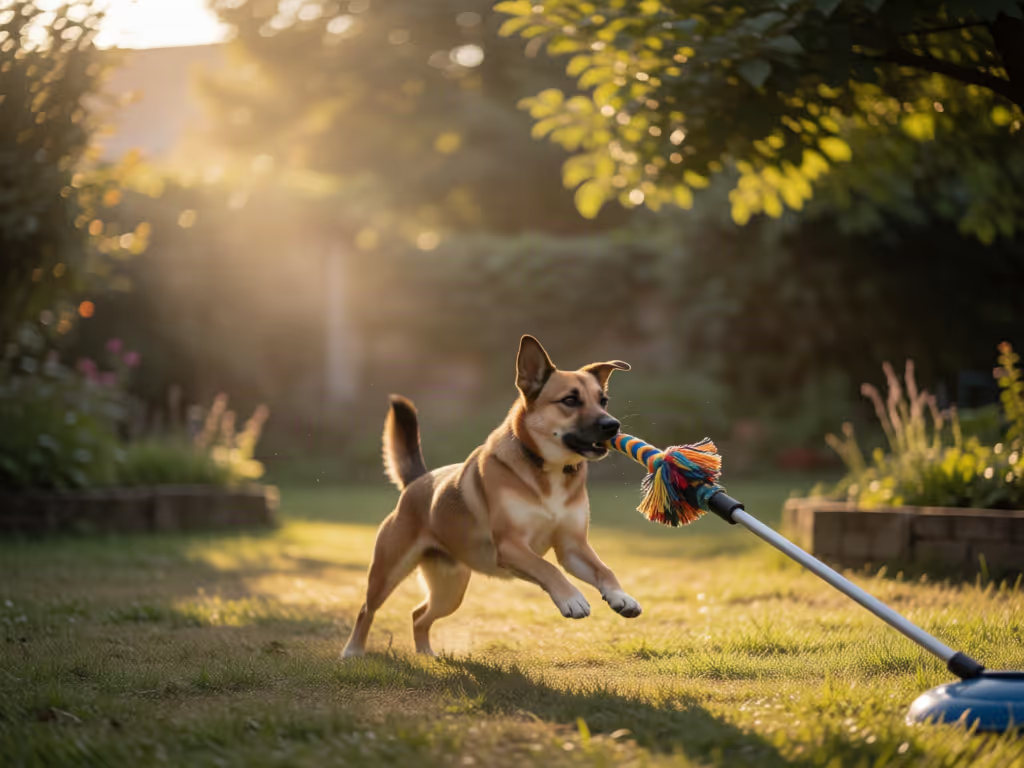
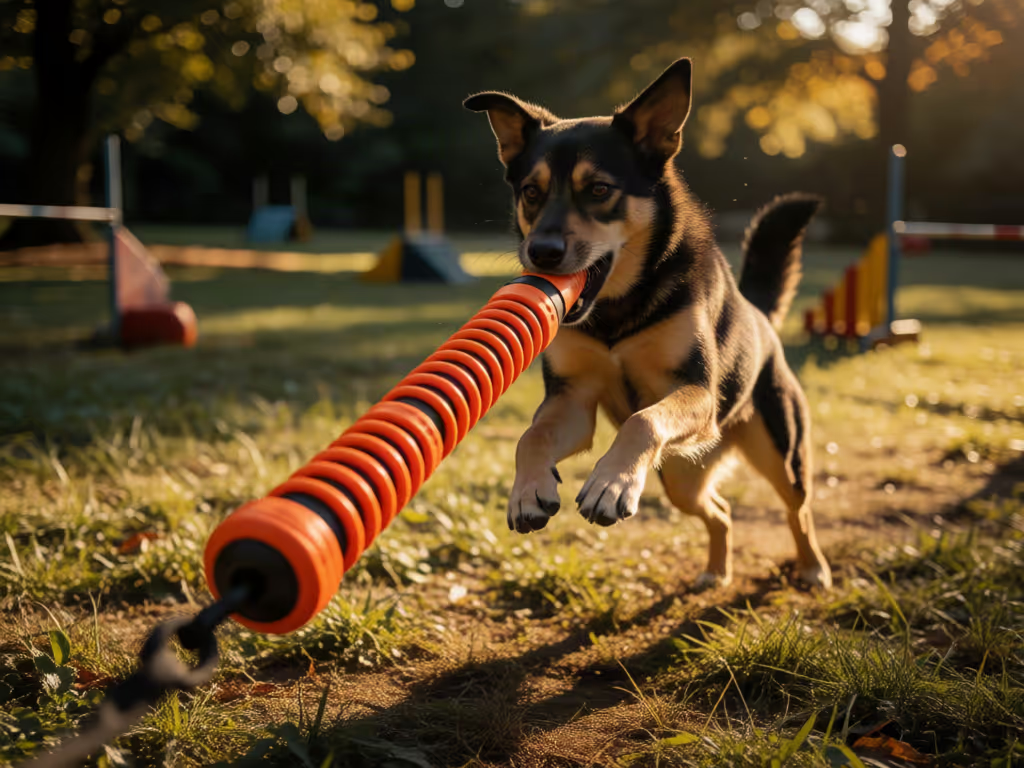
A tug toy for dog training can turn a well-timed check-in, recall, or loose-leash choice into something your dog genuinely wants to repeat. For guidance on rules, safety, and cue-building, see this safe tug games guide for dogs. The right training tug is not a magic calm button, though; it is a handler-led reward you bring out for a clear job, use safely, and put away again. For the Dingo Tugs Toy Pack with Bungee Handle (model Z30003), the listing supports a cautious recommendation as a bungee-handle tug to consider, not a "best" verdict. There is no independent comparison or product test establishing that ranking.
Reward what you want to see.
Start With the Goal, Not the Toy
A tug works best when it has one simple purpose: it pays your dog for a behavior you want more often. That could be turning toward you after noticing a distraction, returning to your side, coming when called in a suitable on-leash setting, or releasing a toy on cue.
This goal-to-gear mapping keeps purchases practical:
- For fast engagement: choose a portable tug you can present immediately after the desired behavior.
- For teaching a release: choose a second similar toy or plan to restart the game after your dog lets go.
- For agility or obedience-style reward play: use the toy only as a reinforcer after a completed repetition, rather than waving it around continually.
- For a dog who finds tug too intense: skip tug as the reward. A dog should never be pressured to engage with a toy they do not enjoy.
The Dingo listing says the toy is intended for fetch, biting, and motivational use in activities including agility, flyball, and obedience. Treat those as seller-stated intended uses, not proof that this particular toy will motivate every dog or suit every sport.
Product Review: Dingo Tugs Toy Pack With Bungee Handle
Without comparative product evidence, there is no meaningful multi-product ranking to make. Its clearest stated feature in the listing is the bungee handle. The retailer description says this stretch is intended to absorb strong pulls and reduce unspecified strain. That is a product claim, not a measured finding about protection for your wrist, elbow, shoulder, or your dog's body. If shock absorption is a priority, compare the mechanics and training uses of other shock-absorbing training leashes before choosing equipment.
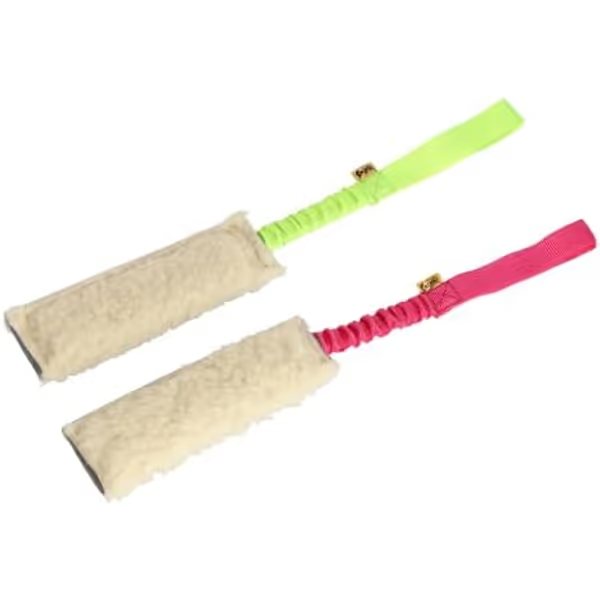
Dingo Tugs Toy Pack
Engage prey drive for reward-based training and interactive play.
4
Length60 and 22 inches
Length60 and 22 inches
Pros
Prey-like design encourages natural instincts.
Bungee handle absorbs tugging shock.
Cons
Not for unsupervised chewing.
Customers praise good quality and bungee, making it an effective reward, especially for smaller dogs.
Customers praise good quality and bungee, making it an effective reward, especially for smaller dogs.
What the listing makes clear
The retailer identifies the product as Dingo model Z30003, describes a bungee handle, and makes training-use claims. It also gives important safety directions: supervise play, use only an undamaged toy, and discard it if it is damaged or if a piece is bitten off.
That makes this a training/play tool, not a chew item to leave down between sessions. Regular inspection, cleaning, and storage also help preserve training equipment safely; see this dog training equipment care guide for broader maintenance practices. If your dog likes to settle in and chew fabric toys, build the "all done" pickup into the routine from the first use.
What is unclear, and why it matters
The product listing contains conflicting descriptions. One area describes the bite section as a plush sheep-wool and polyester blend, while another calls it a two-piece faux fur tug toy with PU fur and a built-in squeaker. The product description states that the bite part is 8 inches long and 3 inches wide. Overall length information conflicts: the description gives a 9-13 inch total length range, while the title contains different numbers without explaining what they measure.
So, do not buy this model assuming a confirmed faux-fur surface, squeaker, two-piece set, or a precise total length. Confirm the current item details and photos at checkout if any of those elements matter to your dog's preferences or your handling plan.
Who it may suit
This tug is worth a closer look if you want:
- A handled toy for reward-based practice.
- A bungee handle; the listing claims it absorbs strong pulls and reduces unspecified strain.
- A toy you will use directly with your dog, inspect regularly, and put away after the session.
- A portable reward for training reps at home or outdoors.
It is a less clear choice if you need a verified material, a guaranteed squeaker, a confirmed total length, or independent durability data. The product description gives an 8-by-3-inch bite-part size, but the overall length details are not resolved for this model.
How to Decide Whether It Is a High-Value Tug Toy for Your Dog
"High value" is not a property printed on a label. It means your dog will happily work to earn access to the toy in that specific environment.
Test interest before building a training plan around any tug toy for dog use:
- Present the toy low and still. Give your dog a moment to notice it; do not push it toward their face.
- Make one small movement away from your dog. If they orient, follow, or grab, calmly begin a brief game.
- Pause while the dog is still interested. End by trading or offering another chance to engage after a release.
- Repeat in easy places first. For a structured way to build engagement around increasing distractions, use the progression ideas in this dog distraction training guide.
A dog's lack of interest is useful information. Some dogs simply do not enjoy tug, and they should not be forced to participate. Choose another reward that your dog does value.
Teach Safe, Useful Tug in Four Time-Boxed Steps
The bungee handle does not replace thoughtful mechanics. Set up the game so your dog can do the tugging work, rather than being pulled, dragged, or whipped through the movement.
Step 1: Set the surface and starting position
Choose a surface your dog can grip. A professional trainer specifically flags smooth wood and tile as potentially slippery. Stand balanced, keep the toy low enough for your dog to take it comfortably, and let the dog approach.
Criteria: Your dog can grab the toy without scrambling or slipping.
Reward: Begin the game when your dog chooses the toy.
Step 2: Let your dog create the pulling action
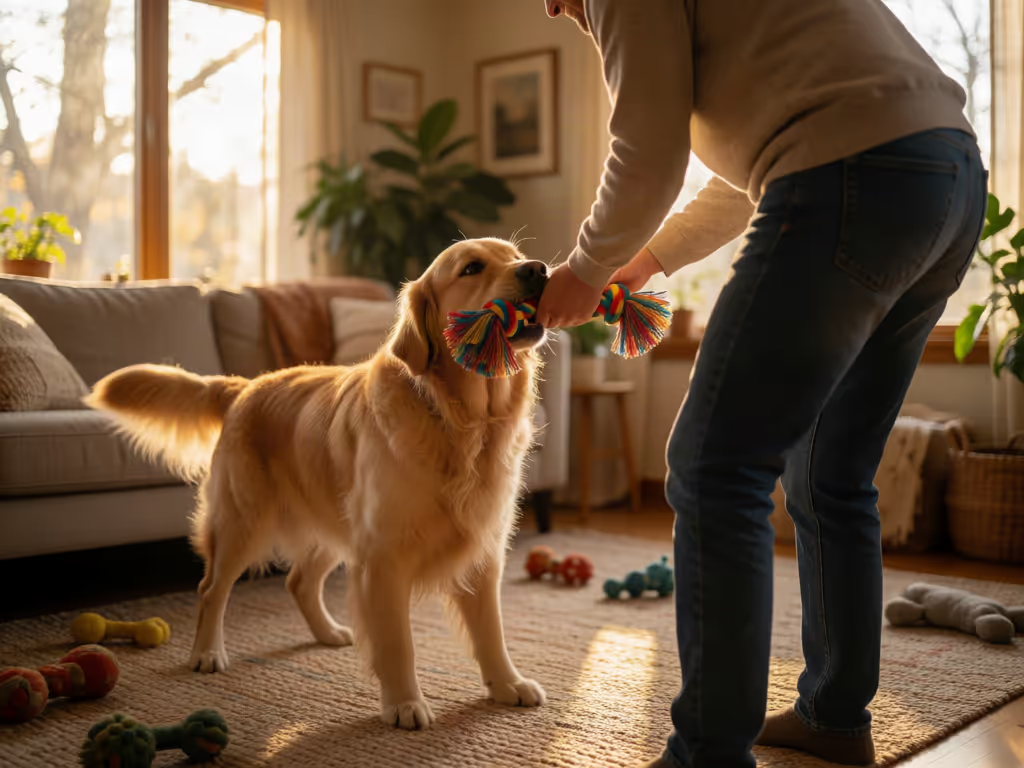
Hold the toy securely and let your dog do most of the tugging. Avoid dragging your dog or swinging their neck up, down, or side to side. Your job is to provide resistance and keep the play controlled, not to create dramatic motion.
Criteria: Your dog stays grounded and engaged while you maintain a steady, comfortable stance.
Reward: Continue the tug for a few beats, then pause.
The Dingo listing claims its bungee handle cushions strong pulls, but that effect has not been independently measured for this toy. Use calm handling either way.
Step 3: Teach "release" as part of the game
Do not turn the release into a confrontation. A practical option is to offer a second similar toy; another is to pause and resume play after your dog releases. The lesson is simple: letting go does not make fun disappear.
Cue: Your chosen release word, said once.
Criteria: Your dog releases or begins to disengage.
Reward: Re-engage with the tug or present the second toy.
Keep your family's cue and response consistent. One person repeatedly prying the toy away while another restarts the game after release creates a muddled picture for the dog.
Step 4: Add tug to real training, one easy context at a time
Use the tug after the behavior, not as a lure that pulls your dog through it. For example:
- Dog checks in with you outdoors → mark the moment → produce the tug → brief handler-led game → put it away.
- Dog returns to you on a long line in an appropriate area → reward with tug if that is the reward they choose.
- Dog completes a simple focus or heel-position repetition → reward with a short tug game.
Start where your dog can win. On one rainy weeknight, a reactive foster I was working with chose to tuck behind me at a crosswalk; the answer was not a flashy gadget or bigger game. A well-fitted Y-front harness, a little decompression, and easy reinforcement reps made the next pass softer: looser leash, softer eyes, fewer looks. A tug can become part of that reinforcement plan only when the dog is able to engage without tipping into overwhelm.
Clear Safety Notes Before Every Session
Use this fast pre-flight check:
- Inspect: No damaged fabric, loose pieces, or bite-off sections.
- Supervise: Keep the game handler-led; remove the toy when play ends.
- Protect footing: Move to a grippy surface if the floor is slick.
- Keep mechanics quiet: No handler-induced head shaking, thrashing, or dragging.
- Read the dog: Stop if the game appears to heighten arousal, possessiveness, or other unwanted behavior.
- Respect physical limits: A professional trainer advises avoiding tug for dogs with cervical-spine or neck issues; seek appropriately qualified guidance for an individual dog with such concerns.
Fit first, then features, always powered by positive reinforcement. In this category, that means a toy should make safe, winnable reps easier, not ask your dog or your body to compensate for chaotic play.
Is Tug Good for Dogs?
A professional trainer says handler-led tug can be used as a reinforcer or reward after training or behavior-modification work. It is not universally the right game. Individual dogs may find it uninteresting, become overly aroused, or show possessive behavior around the toy.
The practical test is not whether tug is "good" in the abstract. It is whether your dog can engage, release, and return to a settled learning state with this game. If not, select a different reward and get professional support if the behavior concerns you.
Dingo Bungee Tug: Bottom Line
The Dingo Z30003 is a plausible option for guardians seeking a training tug with a retailer-described bungee handle. The retailer instructs owners to supervise play, inspect the toy, and discard it if it is damaged or if a piece is bitten off.
However, its product details are internally inconsistent, and there is no independent testing of its materials, durability, actual cushioning performance, or comparative value. That prevents a confident "best bungee tug toy" recommendation.
Your actionable next step
Before purchasing, decide on one behavior you will reward - such as a check-in or release - then confirm the current listing's material and size details. If you bring this tug home, start with three easy cue-criteria-reward reps on a grippy surface, end while your dog is still eager, and store the toy away afterward.
FAQ
Are tugging games mentally stimulating?
A professional trainer describes handler-led tug as mental and physical enrichment and as a possible reward in training. If tug is not a good fit, explore other mental stimulation toys for dogs that can provide enrichment without the same physical intensity. That does not mean every dog will experience it that way. Let your dog's relaxed engagement, ability to release, and post-game recovery guide your choice.
Do dogs like tug of war with people?
Some dogs do not enjoy tug or show interest in it, and they should not be forced to play. Try a quiet invitation, observe their response, and use a different reward if they decline.
What is the safest tug toy for my dog?
There is no single safest or best product established here. Prioritize supervised, handler-led use; an undamaged toy; secure footing; and a play style that lets the dog do most of the pulling. For the Dingo tug specifically, verify the current configuration because its listing gives conflicting material and total-length details.
Related Articles