Budget Canine Fitness Platforms: DIY vs Commercial Under $50
By Rafael Okoye • 4th Apr
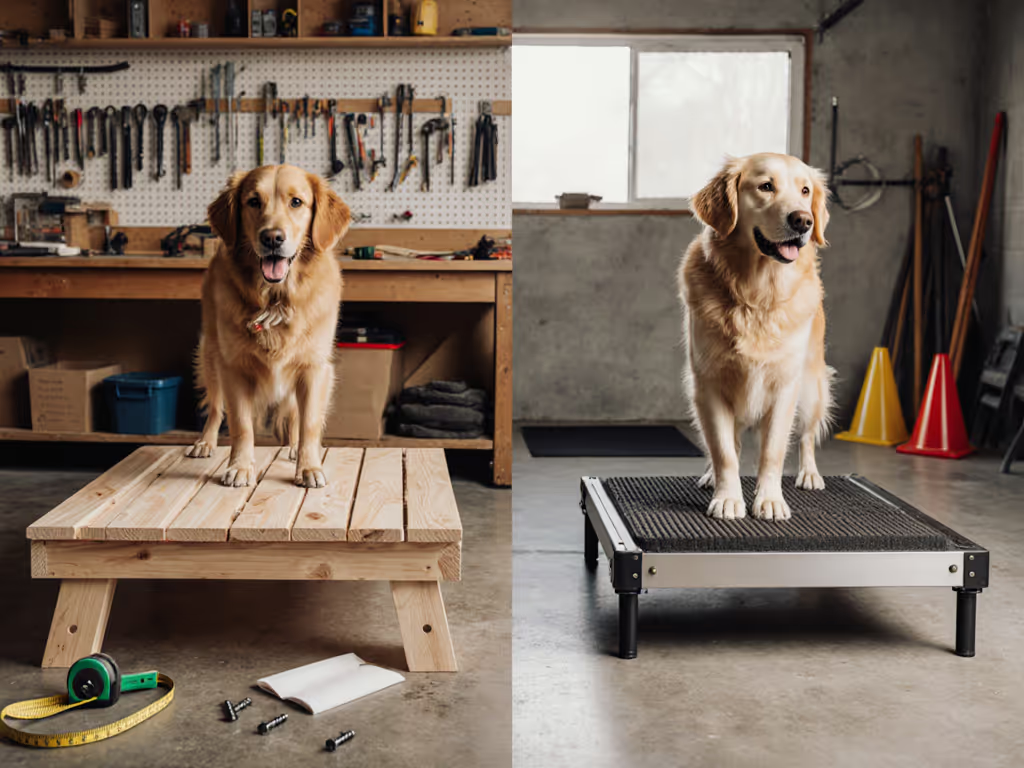
If you're exploring budget canine fitness platforms and affordable dog balance equipment for at-home conditioning, you've likely encountered the same friction point: How do you distinguish between a genuinely useful tool and an overpriced piece of plastic that collects dust in the garage? The fitness platform market has exploded in the past five years, driven partly by growing interest in canine sport and wellness trends, yet a data-driven assessment reveals that many budget options fail on the fundamentals of fit, stability, and measurement fidelity. This article compares DIY and commercial platforms under $50, moving past marketing claims to examine what actually works across different body types and training contexts. For foundational safety guidelines that pair with platform work, see our canine fitness basics guide.
The Anatomy-First Framework: Why Measurement Matters
Before comparing specific platforms, you need to understand why your dog's body dimensions (not their age or breed label) should drive your choice. During a shelter fit clinic several years ago, I worked with twelve very different dogs: barrel-chested Boxers, deep-chested Setters, flat-faced Frenchies, and lanky sighthounds. One particular sighthound developed raw pressure points after every walk using a poorly-fitted commercial harness, until we switched to a Y-front design, lengthened the sternum strap, and tested range of motion on sloped terrain. The chafing stopped; the trot returned. That lesson applies equally to platforms: ergonomics changed the day because we measured first.
For canine fitness platforms, width is the critical fit checkpoint (not length, not height, and definitely not the product's marketing category). The correct width should approximate the distance between your dog's points of hock (the bony protrusions on the rear legs when viewed from behind). This single measurement determines whether your dog's rear feet sit securely, whether their leg alignment stays neutral, and whether they gain proprioceptive feedback or simply walk across a hazard.
Load-Distribution Notes: The Physics Behind Platform Width
If a platform is too wide, your dog's rear leg alignment collapses inward (the opposite of what conditioning aims to achieve). If it's too narrow, rear toes hang off the edge, forcing compensatory joint stress and defeating the purpose of controlled foot placement. The "Goldilocks" zone requires precise measurement.
Here's the practical checkpoint table for typical body types:
| Body Type | Typical Hock Width (inches) | Recommended Platform Width | Length Range |
|---|---|---|---|
| Toy breeds (Chihuahuas, Pomeranians) | 2.5-3.5 | 3-4 | 6-10 |
| Small-medium (Corgis, Beagles) | 4-5 | 4.5-5.5 | 10-14 |
| Medium (Labs, Setters, Shepherds) | 5.5-7 | 6-8 | 14-20 |
| Large/deep-chested (Great Danes, Rottweilers) | 7-9 | 8-10 | 18-26 |
| Sighthounds (Greyhounds, Whippets) | 5-6.5 | 5.5-7 | 16-24 |
| Barrel-chested (Bulldogs, Boxer types) | 6-8 | 6.5-8.5 | 12-18 |
This table reflects real-world measurements, not breed stereotypes. A small Boxer may fall into the toy-to-small-medium range; a large Beagle might measure into medium territory. Measure your dog, then cross-reference.
DIY Platforms: Cost, Customization, and Critical Limitations
Cost advantage: DIY platforms typically cost $15-35 in materials (lumber, non-slip surface, fasteners).
Customization reality: You can tailor width, length, and height to your dog's exact hock measurement and build type (square vs. rectangular vs. long-backed).
The critical limitation: Most DIY builds lack precision in surface material and edge safety. A poorly finished wooden platform splinters, warps with moisture, and creates chafe-risk alerts for sensitive paw pads. Pressure-treated lumber introduces chemical contact with skin. Home-built non-slip coatings often flake or become slippery when wet, creating fall hazards during vigorous conditioning work.
DIY Fit Checkpoints
- Surface texture: Must grip without abrading. Test with your bare hand first; if it feels rough on your palm, it will irritate paw pads over repeated reps.
- Edge safety: All edges must be rounded and smooth. Sharp edges create micro-lacerations.
- Height stability: Platforms under 4 inches tall blend into the ground and fail to give dogs enough proprioceptive information when they step off. Aim for 4-6 inches depending on your dog's leg length and age.
- Moisture resistance: If you plan outdoor use or cleaning, untreated wood absorbs water, warps, and becomes unsafe.
- Longevity: A well-built DIY platform lasts 2-3 seasons; commercial platforms rated for 3-5+ years.
Verdict on DIY: If you're mechanically skilled and committed to precise measurement, DIY works, but only if you invest time in surface finishing and safety. For most guardians, the labor cost and material iteration often exceed the savings. If you want step-by-step build plans and safety specs, use our DIY pro-level training equipment guide.
Commercial Platforms Under $50: What Budget Options Deliver
Common Budget Variants
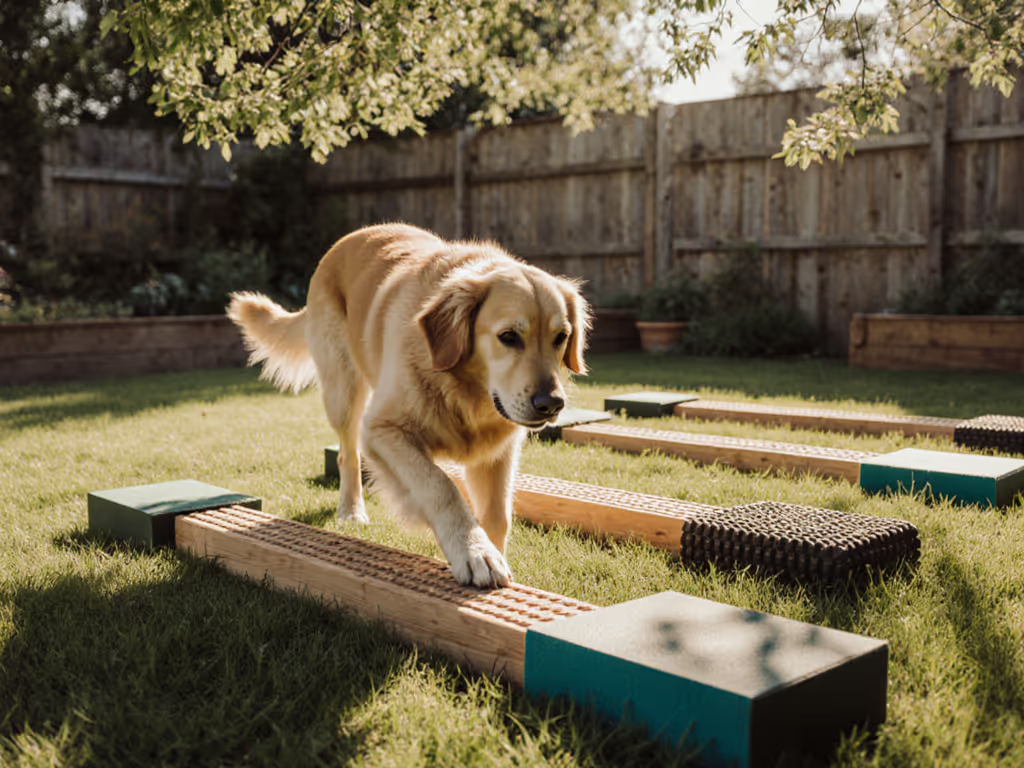
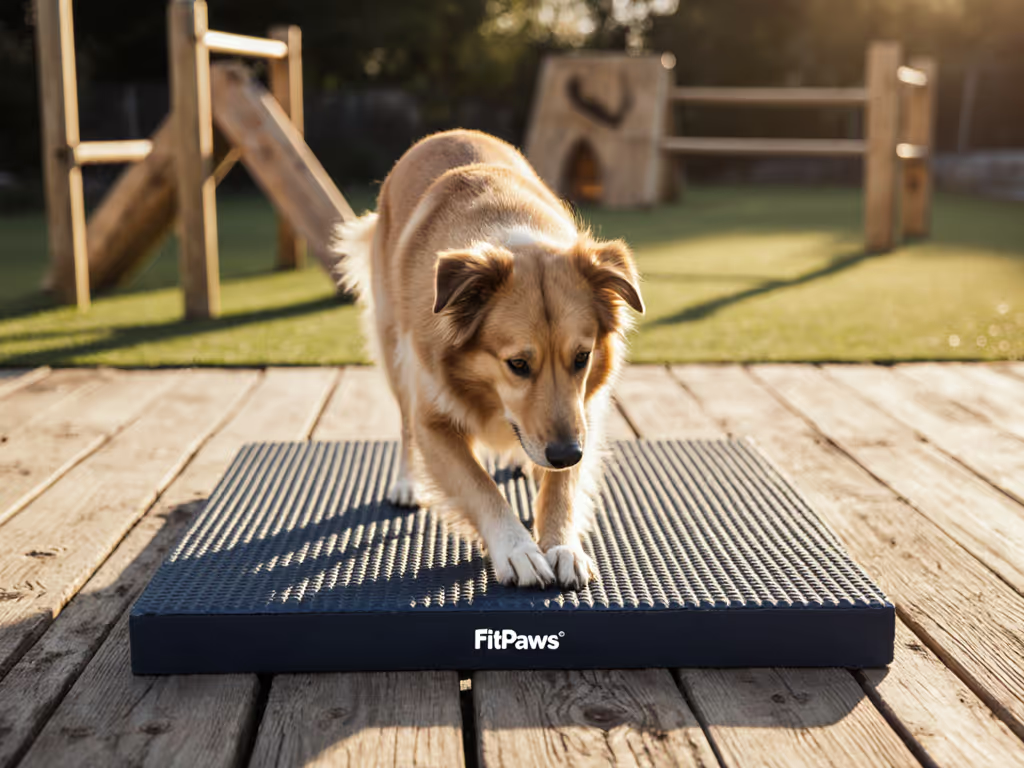
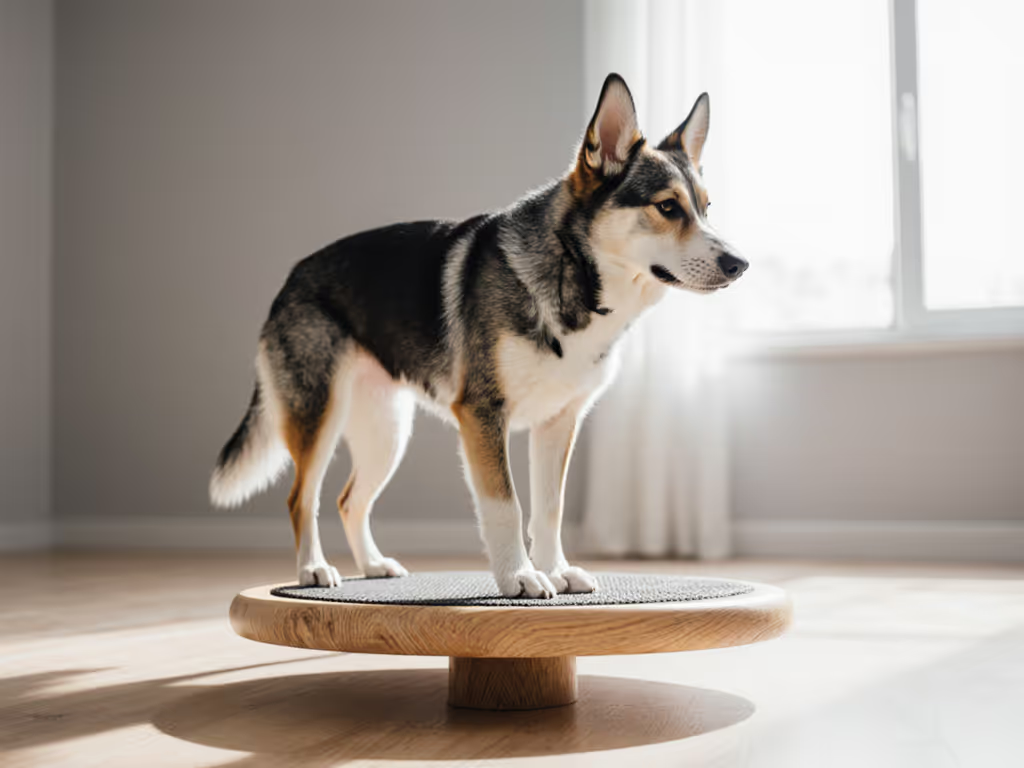
Plastic-top platforms ($25-40): Usually 12-16 inches long, 8-10 inches wide, with a thin plastic or rubber surface over a lightweight frame. Advantages: portable, washable, stack-friendly. Disadvantages: the plastic surface often lacks sufficient grip, especially when wet or dusty. Chafe-risk alert: repeated use on thin, hard surfaces can sensitize paw pads in high-friction breeds (rough-coated dogs, heavy-footed dogs).
Collapsible foam platforms ($20-35): Lightweight, squeezable into a backpack, available in various widths. Advantages: zero assembly, portable for travel or multi-dog households. Disadvantages: foam compresses over time, reducing proprioceptive feedback; the surface can absorb odor and moisture if not dried thoroughly. Fit checkpoint: width tolerance is loose (most assume medium-sized dogs), so measure your hock width before purchasing.
Stackable modular sets ($35-50 for 2-3 units): Designed to create height variation or multi-dog setups. Advantages: can be arranged to match your dog's width across multiple platforms. Disadvantages: connection points are often flimsy; units shift during vigorous use.
Load-Distribution Reality Check
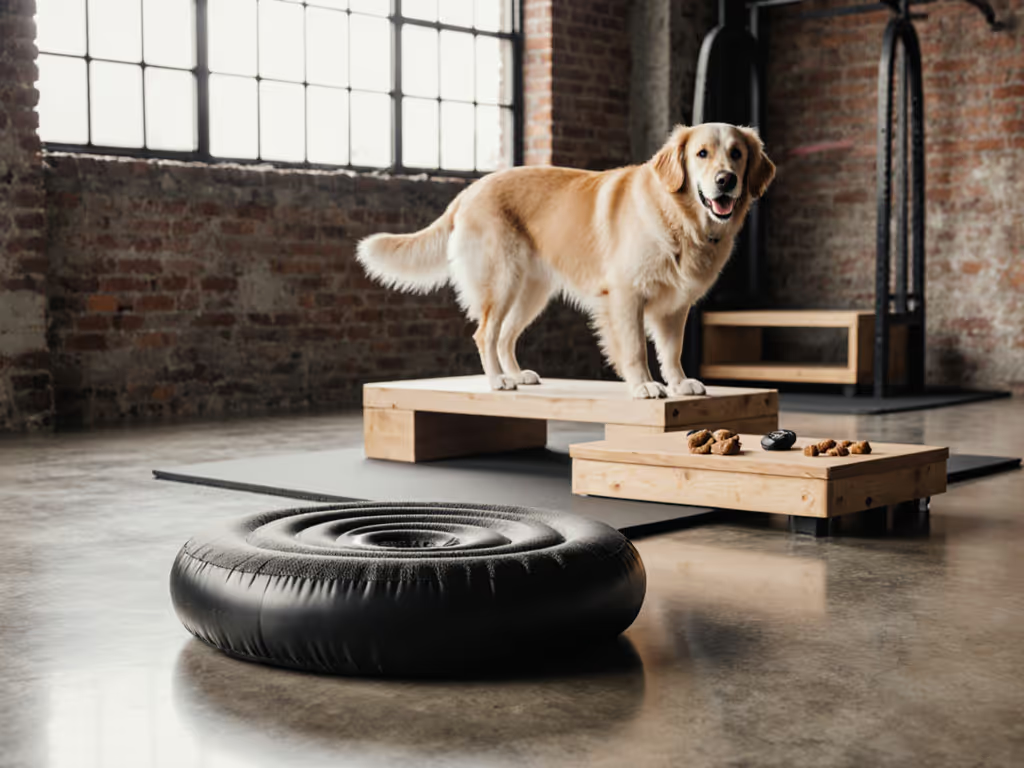
Most sub-$50 commercial platforms are engineered for light-to-moderate conditioning work (basic foot placement, balance drills). To choose the safest construction type for your dog, compare inflatable vs solid platforms. If your dog is large, high-drive, or performs explosive movements (jumping on/off platforms repeatedly), weight limits kick in around 60-80 pounds. Exceeding those limits voids any warranty and creates injury risk. Check the manufacturer's weight rating explicitly, many bury this detail in fine print.
Adjustments beat add-ons: A platform with poor width fit cannot be fixed with cushioning or extension pieces.
Breed-Fit Variants and Multi-Dog Scenarios
The audience pain point here is acute: many households have dogs of drastically different sizes and body types. A DIY approach allows you to build multiple platforms tailored to each dog. A commercial route forces compromise: you either buy multiple units (cost escalates quickly) or use a single platform poorly fit for all dogs.
Measurement Workflow for Multi-Dog Homes
- Measure each dog's hock width from a standing position, ideally on a level floor with the dog relaxed.
- List body type (square vs. rectangular vs. long-backed) for each.
- If DIY: Build or commission one platform per dog, using the table provided earlier.
- If commercial: Prioritize fit for your dog who will use the platform most frequently; accept suboptimal fit for occasional users.
Sighthound note: These dogs often have narrower hock widths (5-6.5 inches) despite their height. A platform marketed for "medium dogs" (typically 6-8 inches wide) may be oversized, leading to rear leg splaying and joint stress.
Barrel-chested note: Bulldogs, Boxers, and similar breeds need platforms that accommodate a wider stance. Many budget platforms assume a narrower, rectangular build and fail this cohort.
Critical Comparison Table: DIY vs. Commercial Under $50
| Criterion | DIY (Custom-Built) | Commercial Budget |
|---|---|---|
| Material cost | $15-35 | $20-50 |
| Time investment | 3-8 hours (build + finishing) | 0-15 min (assembly) |
| Width fit precision | Exact to 0.5 inch | ±1-2 inch tolerance |
| Surface quality | Variable; depends on your skill | Moderate; often hard or thin |
| Durability (seasons) | 2-3 with maintenance | 1-2 with heavy use |
| Portability | Low; heavy if made right | High; designed for mobility |
| Multi-dog scalability | High; build per dog | Low; must buy per dog |
| Warranty/support | None | Manufacturer-dependent |
| Chafe risk | Low if finished properly | Moderate to high |
| Proprioceptive feedback | Excellent at correct height | Good to moderate |
The Measurement and Adjustment Protocol: Measure Twice, Adjust Thrice, Then Test on Real Sidewalks
Regardless of platform source, your job is rigorous fit validation:
- Measure hock width with a cloth tape on a standing dog, from point of hock to point of hock (rear view). Record to the nearest 0.5 inch.
- Test initial placement: Place your dog on the platform (or prototype) and observe rear foot position. Rear toes should sit flat; legs should be perpendicular to the ground, not splayed or pinched.
- Adjust or iterate: If too wide, consider a narrower commercial variant or rebuild at a tighter specification. If too narrow, widen by 0.5-1 inch and retest.
- Real-world validation: Test the platform during actual conditioning drills in real light, real weather, real distractions. A platform that works in your living room may feel unstable on a damp patio or under trail shadows.
- Pressure-point check: After 2-3 sessions, inspect paw pads for redness, callusing, or abrasion. Any sign of chafing means the surface texture or width needs adjustment.
Entry-Level Canine Conditioning Tools: Platform Stacking and Progression
Once you've validated your platform, the next layer is progression. Many budget platforms become more valuable when used in sets, stacking them to create height variation, or arranging multiple units side by side for footwork drills.
Low-cost progression ideas:
- Stack two platforms at staggered heights to teach uphill/downhill weight shifts.
- Arrange three platforms in a line for sequential foot placement ("platform walk").
- Pair a narrow platform with a wider mat to create contrast feedback, dog learns the boundary of the conditioning tool.
These setups cost minimal extra money but demand clear measurement and stable connection points. Commercial stackable sets are better here than DIY, since connection tolerances are engineered in. For behavior-focused protocols using raised platforms, follow our calm behavior platform training guide.
Final Verdict: Which Route Wins Under $50?
Choose DIY if:
- You have basic carpentry skills and time (4-8 hours) to invest.
- Your dog has an unusual body type (very wide hock, long back, or extreme size) that makes commercial platforms poor fits.
- You have multiple dogs and want custom-tailored options.
- You're willing to source and test finish materials obsessively.
- You plan long-term use (3+ seasons) and will maintain the platform.
Choose commercial if:
- You prioritize speed and zero assembly friction.
- Your dog's measurements fall into typical ranges (4-7 inch hock width, medium body type).
- You want portability and storage convenience.
- You value a warranty or easy replacement.
- You're testing canine fitness as a new practice and want to minimize upfront labor.
The realistic hybrid approach: Buy a commercial platform as a short-term test ($25-35), measure your dog's exact hock width during that trial period, then decide whether to scale up with additional commercial units or commission a custom DIY solution tailored to your dog's anatomy. This approach delays significant spending while building confidence in your measurement technique.
A Final Note on Platform Limits
No platform under $50 is a substitute for qualified conditioning instruction or veterinary clearance. Platforms are tools for proprioceptive work, balance training, and rear-end awareness, not cure-alls for gait issues, weakness, or injury. If your dog shows limping, reluctance, or pain during platform work, stop and consult your veterinarian or certified rehabilitation therapist. Adjustments beat add-ons, but measurement and safety beat convenience every time. Start with accurate hock width, validate fit across real environments, and progress thoughtfully. That's how ergonomic design serves canine welfare from day one.
Related Articles